• 1580 Creekside Dr. Suite 220 Folsom, CA 95630
  • (916) 983-4444 Make an appointment

category - Colonoscopies

  1. Home
  2. Colonoscopies

Beyond the Burn: How a Digestive Health Consultant Uncovers Silent Gut Issues

When most people think of a visit to a gastro medical clinic, they imagine seeking relief for obvious discomfort like bloating or sharp pain. However, digestive health is often more complex than a single symptom. For many in Folsom, the most significant health breakthroughs happen when a digestive health consultant looks beyond the immediate “burn” to find the underlying cause of persistent issues.

Table of Contents

The Complex Gallbladder and Acid Reflux Connection  

One of the most frequent reasons for a visibility gain in modern gastroenterology is the growing awareness of the gallbladder and acid reflux connection. While many patients assume their chest pain is standard GERD, the reality is often found in the biliary system.

  • Bile Reflux vs. Acid Reflux: Standard acid reflux involves stomach acid, but when the gallbladder is dysfunctional, bile can back up into the stomach, causing a similar burning sensation that does not respond to typical over-the-counter antacids.
  • Silent Gallstones: You can have gallbladder issues without a dramatic “attack.” These silent stones can cause chronic inflammation that disrupts the entire digestive tract.
  • The Diagnostic Advantage: A specialized gastro medical clinic uses advanced imaging to differentiate between these two conditions, ensuring you aren’t treating the wrong organ.

Why "Wait and See" Isn't a Strategy  

Recent data shows that while interest in clinics is rising, many people are seeing a “visibility loss” in their own health by delaying screenings. Terms like gastroenterologist and digestive health consultants have seen a slight dip in search visibility, suggesting that some may be ignoring the “silent” signs of gut trouble.

At our Folsom gastroenterology clinic, we encourage a proactive approach. Waiting for severe symptoms can lead to more invasive procedures later. A consultation can identify:

  1. Early Malabsorption Issues: Finding out why you feel fatigued after eating.

  2. Inflammatory Triggers: Identifying specific foods that are causing low-grade gut damage.

  3. Preventive Screening Needs: Determining exactly when you should schedule your next colonoscopy.

The Role of a Colonoscopy in Total Wellness  

While the search for colonoscopy doctors in Folsom, CA has seen a slight decrease in visibility, the medical importance of the procedure remains the gold standard for preventive care. A colonoscopy near me isn’t just a test for cancer; it is a comprehensive look at the health of your colon that can explain issues like chronic constipation, diarrhea, or unexplained weight loss.

Trusted Care at Folsom’s Premier Gastro Medical Clinic  

Despite shifts in search trends, the gastro medical clinic remains a top performer for patient trust in the Folsom area. We bridge the gap between feeling “fine” and achieving optimal digestive wellness. By focusing on the gallbladder and acid reflux connection and maintaining a rigorous schedule for colonoscopy screenings, our team ensures that no silent issue goes unnoticed.

Take the Next Step in Your Health Journey Are you ready to look beyond the surface of your symptoms? Contact our gastroenterology clinic today. Our digestive health consultants are here to provide the clarity and relief you deserve

Frequently Asked Questions: Gastrointestinal Health in Folsom  

What is the connection between my gallbladder and acid reflux?

Many patients are surprised to learn about the gallbladder and acid reflux connection. While traditional acid reflux is caused by stomach acid entering the esophagus, gallbladder dysfunction can lead to “bile reflux”. This occurs when bile backs up into the stomach, mimicking the burning sensation of heartburn but often requiring different clinical treatment than standard GERD.

A digestive health consultant at a specialized gastro medical clinic has the advanced diagnostic tools necessary to uncover “silent” issues. While a general practitioner can treat basic symptoms, a specialist investigates the root cause of chronic bloating, abdominal pain, or persistent reflux to prevent long-term damage.

Generally, adults should begin screening at age 45, though those with a family history of colorectal issues may need to start sooner. If you are searching for a colonoscopy near me, our Folsom gastroenterology clinic provides comprehensive screenings that are essential for the early detection and prevention of colon cancer.

You should consider scheduling an appointment at our gastro medical clinic if you experience any of the following:

  • Persistent heartburn or “acid reflux” that doesn’t respond to over-the-counter medicine.
  • Unexplained changes in bowel habits.
  • Frequent abdominal pain or bloating.

A need for a routine preventive colonoscopy

Yes. At our Folsom facility, we utilize the latest clinical protocols to ensure the colonoscopy prep process is as efficient and comfortable as possible. Modern prep solutions are typically lower in volume and more palatable than older versions, making it easier for patients to complete the necessary steps for a clear screening.

Choosing the Right Colonoscopy Clinic: A Patient’s Guide for 2026

Finding the right colonoscopy provider is one of the most important steps you can take for long-term digestive health. As screening guidelines evolve and technology advances, patients searching for colonoscopy doctors in Folsom, CA need more than just proximity—they need expertise, trust, and modern care.

This 2026 patient guide explains what to look for in a Folsom gastroenterology clinic, what to expect from a modern colonoscopy, and why early screening continues to save lives.

At GastroMed Clinic, we believe informed patients make healthier decisions.

Why Colonoscopy Screening Is Still Essential in 2026  

Despite advances in non-invasive testing, colonoscopy remains the gold standard for colorectal cancer prevention. It is the only screening method that both detects and removes precancerous polyps during the same procedure.

In 2026, medical experts continue to recommend colonoscopy for:

  • Adults age 45 and older
  • Individuals with family history of colorectal cancer
  • Patients with ongoing digestive symptoms

Choosing the right colonoscopy clinic plays a key role in accurate diagnosis and prevention.

What Defines a High-Quality Colonoscopy Clinic  

A reputable Folsom gastroenterology clinic should meet several important standards:

  • Board-certified gastroenterologists
  • Advanced imaging and diagnostic equipment
  • Clear safety and sedation protocols
  • Personalized patient education and follow-up care
  • Clean, accredited medical facilities

At GastroMed Clinic, our approach is centered on both medical excellence and patient comfort.

How to Find the Best Colonoscopy Doctors in Folsom, CA  

When researching colonoscopy doctors in Folsom, CA, patients should consider:

  • Years of experience performing colonoscopies
  • Specialized GI training and certifications
  • Ability to clearly explain results and next steps
  • Strong patient satisfaction and local reputation

A skilled gastroenterologist ensures not only accurate screening but also peace of mind throughout the process.

Searching “Colonoscopy Near Me”: What Really Matters  

Many patients start their search with “colonoscopy near me gastroenterologist”, but quality should always outweigh convenience.

In 2026, top clinics offer:

  • Streamlined scheduling and reduced wait times
  • Comprehensive pre-procedure consultations
  • Comfortable sedation options
  • Efficient recovery and post-procedure guidance

GastroMed Clinic provides patient-focused care designed to minimize stress while maximizing accuracy.

The Colonoscopy Experience: From Prep to Recovery  

Understanding the process can ease anxiety. A modern colonoscopy typically includes:

Before the Procedure

  • Clear dietary and preparation instructions
  • Medication review with your provider

During the Procedure

  • Short procedure time (usually 20–30 minutes)
  • Sedation for comfort

After the Procedure

  • Same-day discharge
  • Results discussion and follow-up plan 

Modern advancements have made colonoscopy safer, faster, and more comfortable 

Why GastroMed Clinic Is a Trusted Folsom GI Provider  

Patients throughout Folsom choose GastroMed Clinic because we offer:

  • Experienced and compassionate gastroenterologists
  • Advanced diagnostic technology
  • Individualized digestive health care
  • A strong focus on prevention and education

Our mission is to support lifelong digestive health through early detection and expert GI care.

Frequently Asked Questions (FAQ)  

At what age should I schedule my first colonoscopy?

Most adults should begin screening at age 45, or earlier if they have risk factors or a family history of colorectal cancer.

Yes. Colonoscopy is a routine, safe procedure when performed by experienced gastroenterologists using modern equipment.

Most patients return to normal activities the next day, though sedation may require rest for the remainder of the procedure day.

Yes. Colonoscopy can remove precancerous polyps before they develop into cancer, making it a powerful preventive tool.

You can schedule a consultation with a trusted Folsom gastroenterology clinic by visiting
👉 https://www.gastromedclinic.com/

Gastroenterology Medical Clinic

Everything You Need to Know about Colonoscopies

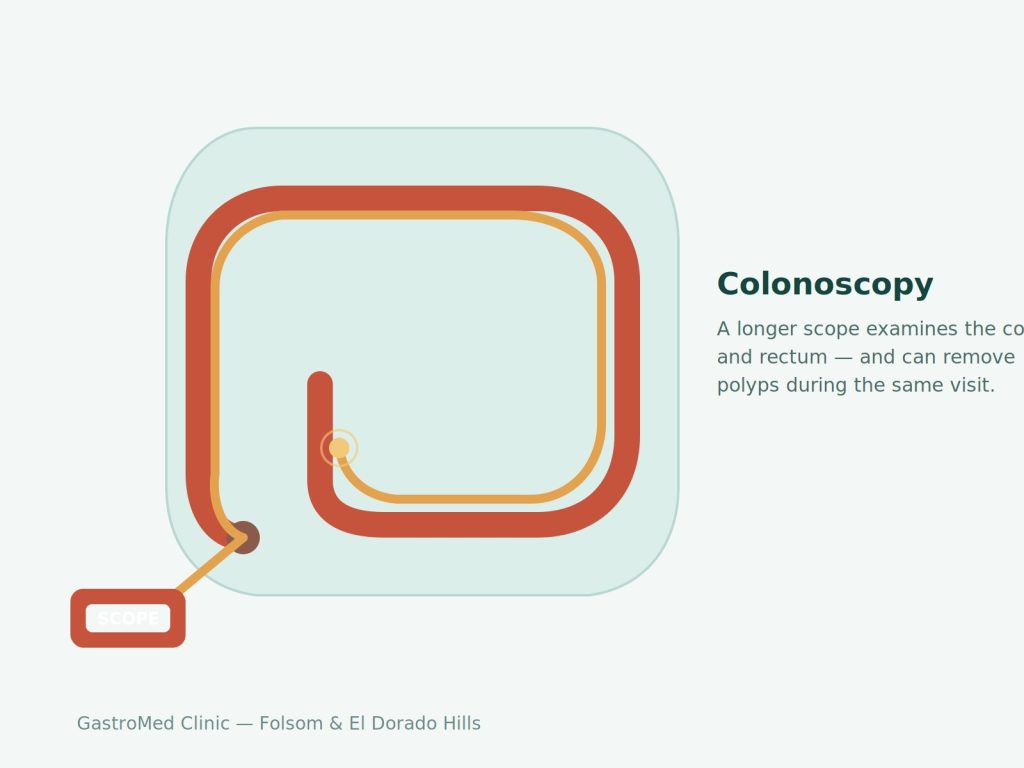
Colonoscopy is a safe and common procedure that examines the colon or large intestine for any abnormalities. In this procedure, a doctor inserts a thin flexible tube into the anus and advances it slowly into the rectum and through the colon. The instrument used is called a colonoscope. It is about one inch thick with a camera and a light source at its tip, allowing the doctor to visualize the entire colon on a video monitor.

Why is a colonoscopy done?


A doctor may recommend a colonoscopy for a variety of reasons. In most cases, colonoscopies are done as a screening tool for colorectal cancer. It is also performed to investigate blood in the stool and chronic diarrhea.


Of cancers that affect both men and women, colorectal cancer is the second leading cause of cancer deaths in the United States. At a glance, 140,000 new cases are diagnosed every year with 50,000 estimated deaths. According to research, at least 30,000 lives each year can be saved through awareness and screening.

How to prepare for a colonoscopy


Your doctor will advise you on the right diet and proper cleansing routine that is best for you. The goal here is to clean out the contents of the bowel prior to the test so that your gastroenterologist can thoroughly examine your colon.


While you may find the bowel prep the most difficult part of the examination, it is crucial to follow the specific plan exactly as your doctor tells you to. Otherwise, your doctor will not be able to see problems, like polyps or cancer, during the colonoscopy, and you will have to repeat the prep and the examination.


Generally, a gastroenterologist will ask you to limit your diet to clear liquids at least a day before the procedure. A clear liquid diet consists of clear liquids that are easily digested and leave no undigested residue in the intestinal tract. They may be colored as long as you can see through them. This may include water, tea, broth, gelatin desserts, ginger ale, sherbet, and clear fruit juices.


You will also be given a bowel prep medicine to thoroughly clean your colon. This can come in the form of a liquid cleansing solution or an oral laxative. Again, it is important to follow your doctor’s instructions carefully to aid in a comprehensive and accurate test.

Can I take my meds before a colonoscopy?


Inform the doctor of any medical conditions and medications you have. In most cases, you can continue taking your current medications. However, some medications may require special instructions such as aspirin products, blood thinners (i.e., warfarin or heparin), arthritis medications, insulin, and iron products.


It is also important to inform your gastroenterologist of any allergies you have to medications as well as any problems you have had with a bowel prep in the past. Your doctor should also know if you are pregnant or breastfeeding as this will help them decide the type of bowel prep that is right for you. Also, mention other significant medical conditions you have such as high blood pressure, heart, kidney, and liver disorders.

What happens during a colonoscopy?


A colonoscopy isn’t painful, but you might feel some pressure, bloating, or cramping during the procedure. You will be given a pain reliever and a sedative to help you relax and minimize any discomfort. You will then be instructed to lie on your side or back as your doctor slowly inserts the colonoscope into your rectum.


The doctor will pump air or carbon dioxide into your colon through the tube of the colonoscope. This is to inflate your colon which then gives your doctor a clear view of your colon’s lining. The movement of the scope and the air inside your colon can cause abdominal cramping and the urge to have a bowel movement.


Although the examination normally takes about 30-60 minutes, your stay can last for two to three hours for waiting, preparation, and recovery. Depending on the outcome of the procedure, your gastroenterologist will advise whether or not you need to undergo any additional testing.

What if an abnormality is seen during a colonoscopy?


If the colonoscopy reveals something abnormal, your doctor might pass an instrument through the colonoscope to collect a tissue sample or biopsy to help identify whether that area is cancerous or not. If the colonoscopy is done to detect bleeding sites, your doctor can stop the bleeding with laser, heat, medication, or use of small clips, through the colonoscope.


As the colonoscope passes through the colon, it is possible to find polyps or small benign (noncancerous) growths. In that case, your doctor can remove them during the procedure by using a wire loop biopsy forceps (aka snares) or with biopsy instruments. Polyps can also be destroyed by burning the polyp base with an electric current. Polypectomy doesn’t normally cause any pain since the lining of the colon is not sensitive to burning or cutting.

What happens after a colonoscopy?


You will be monitored for an hour or two post-colonoscopy until the effects of the sedatives have worn off. It is normal to experience some cramping or bloating due to the air introduced into the colon during the procedure. This can be relieved quickly with the passage of gas.


Before leaving the clinic, your gastroenterologist might discuss the findings with you. If a biopsy was performed, you will likely need to wait for its results, which usually takes a few days.


It is also important to have someone drive you home and accompany you if sedation has been given prior to or during the examination. The side effects of the medication may cause nausea and drowsiness. Your reflexes and judgment may also be weakened throughout the day even if you feel alert after the procedure.


When it comes to your diet, it should be back to normal unless your doctor instructs otherwise. If polyps were removed, your doctor might restrict your activities, and you might be advised to eat a special diet for a specified time period.

What are the possible complications post-colonoscopy?


Overall, colonoscopy is a very safe test. When done by highly trained and highly experienced gastro doctors, complications of colonoscopy and polypectomy are rare. While bleeding may occur at the area where the sample tissue was taken or the polyps were removed, the bleeding is often minor and can go away on its own. Take note, however, that the bleeding can occur several days after the procedure.


You can also experience reactions to the sedatives used, such as localized irritation at the injection site, or complications from existing heart or lung disorders. While complications after colonoscopy are rare, it is crucial to recognize early signs of potential complications, including severe abdominal pain, fever and chills, or rectal bleeding of more than half a cup. If you notice any of these signs, contact your gastroenterologist immediately. Contact Gastroenterology Medical Clinic in Folsom CA for all your colonoscopy needs.

Frequently Asked Questions

What is a colonoscopy, and why do I need one?

A colonoscopy is a test where a doctor checks your colon using a small camera to look for issues like cancer, blood in your stool, or ongoing diarrhea.

How do I prepare for a colonoscopy?

You’ll need to follow a clear liquid diet and take medicine to clean out your colon. Follow your doctor’s instructions carefully for the best results.

Can I take my regular medicine before the test?

Usually, yes. But let your doctor know about your medications, allergies, or health conditions so they can give you proper advice.

What happens during the procedure?

You’ll get medicine to relax, and the doctor will gently insert a camera to examine your colon. The test takes about 30-60 minutes.

What if they find something during the test?

If the doctor finds anything unusual, like polyps, they can remove them or take a sample during the test.

What happens after the test?

You might feel bloated, but that goes away quickly. If you had medicine to relax, someone needs to drive you home. Your doctor will explain the results.

Are there any risks?

Colonoscopy is safe, but rare issues like bleeding or severe pain can happen. Contact your doctor if you notice anything unusual after the test.

8105 Saratoga Way Suite 210 El Dorado Hills, CA 95762
1580 Creekside Dr. Suite 220 Folsom, CA 95630
(916) 983-4444


Schedule: Monday-Friday
8:30 AM to 12:00 PM, 1:00 PM to 5:00 PM
Physician available 24 hours a day, 24/7, 365 days

© 2016-2026  Gastroenterology Medical Clinic