
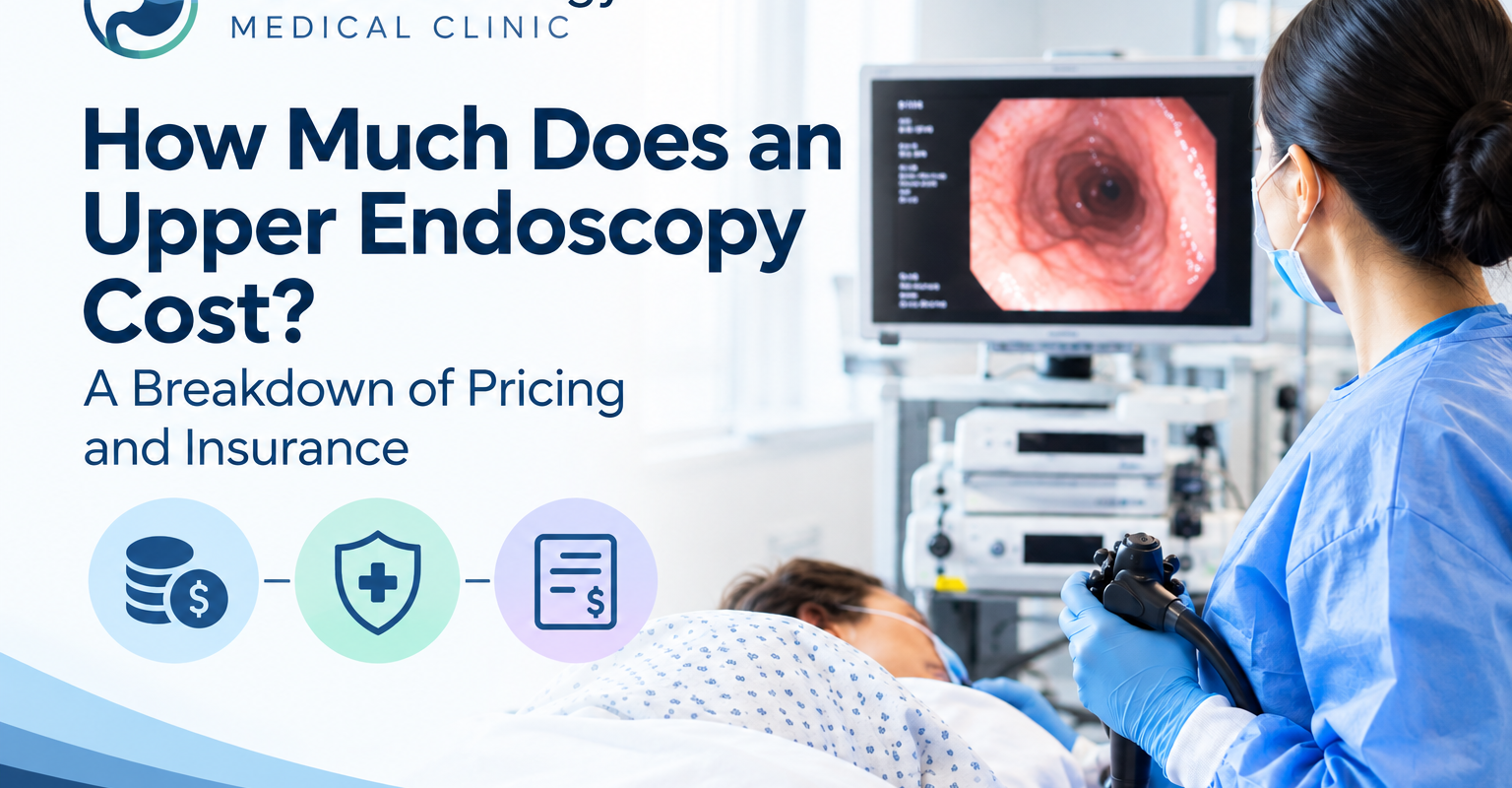
If your doctor recommended an upper endoscopy, one of your first questions is probably about cost. It’s a fair question, since pricing for medical procedures rarely feels straightforward, and endoscopy is no exception. The good news: once you understand what actually drives the price, the numbers make a lot more sense.
At GastroMed Clinic, serving Folsom and El Dorado Hills, we get cost questions from patients almost as often as we get medical ones. So, this guide breaks down exactly what factors into an upper endoscopy’s price, what you can typically expect to pay, and how to get a clear estimate before you schedule.
Table of Contents

What Factors Into the Cost
An upper endoscopy isn’t a single flat fee. Instead, several separate charges combine to make up your total bill:
- Facility fee. This covers the cost of the room, equipment, and staff. It’s usually the largest single line item, and it varies depending on whether the procedure happens at a hospital, an outpatient surgical center, or an in-office suite.
- Physician fee. This pays for your gastroenterologist’s time and expertise in performing the procedure.
- Anesthesia fee. Most patients receive sedation, so an anesthesiologist or certified nurse anesthetist typically bills separately.
- Biopsy and pathology fees. If your doctor takes a tissue sample during the exam, expect an additional lab fee to analyze it.
- Pre-procedure testing. Occasionally, bloodwork or an EKG is required beforehand, especially for patients with certain health conditions.
Because these charges come from different providers, patients sometimes receive multiple separate bills after a single procedure. That’s normal, though it can be confusing if you’re not expecting it.
Average Cost Range: With and Without Insurance
Nationally, an upper endoscopy typically costs somewhere between $1,000 and $3,500 without insurance, though prices swing widely based on geographic location, facility type, and whether a biopsy is performed. Outpatient surgical centers generally cost less than hospital-based procedures, sometimes by a significant margin, since hospitals carry higher overhead costs.
With insurance, your actual out-of-pocket cost depends heavily on your specific plan. Copays, deductibles, and coinsurance all play a role, and if you haven’t met your annual deductible yet, you may be responsible for a larger share of the bill upfront.
Diagnostic vs. Preventive: Why the Label Matters
Here’s something many patients don’t realize: how your insurance classifies the procedure can meaningfully change your cost. Colonoscopies for patients 45 and older are often covered at no cost as a preventive screening under the Affordable Care Act. Upper endoscopies, however, work differently.
Because an upper endoscopy is almost always ordered to investigate specific symptoms, like persistent heartburn, difficulty swallowing, or unexplained pain, it’s typically billed as a diagnostic procedure rather than a preventive one. That distinction matters, since diagnostic procedures are usually subject to your deductible and coinsurance, while preventive procedures often aren’t. If you’re unclear on your GERD symptoms, our related post on bile reflux vs. acid reflux can help you describe them more precisely when you talk to your doctor or insurer.
According to the National Institute of Diabetes and Digestive and Kidney Diseases, upper endoscopy is one of the most common procedures used to diagnose conditions affecting the esophagus, stomach, and small intestine, which is exactly why insurers tend to require documented symptoms before approving coverage.
Questions to Ask Before Scheduling
A few quick questions to your insurance provider can prevent billing surprises later:
- Is an upper endoscopy covered under my plan, and is it classified as diagnostic or preventive?
- Have I met my deductible for the year?
- Is the facility, physician, and anesthesiologist all in-network?
- Will a biopsy, if needed, be covered under the same visit or billed separately?
- Do I need pre-authorization before scheduling?
Asking these questions upfront takes maybe ten minutes, but it can save you from an unexpected bill weeks later.
How to Get an Accurate Estimate at GastroMed
Every patient’s situation is different, so the most reliable way to know your actual cost is to get a personalized estimate. At GastroMed Clinic, our team can verify your insurance benefits before you schedule, walk you through expected costs for your specific plan, and flag anything that might require pre-authorization.
If you’re also weighing whether you need an upper endoscopy, a colonoscopy, or both, our guide on upper endoscopy vs. gastroscopy vs. colonoscopy breaks down which procedure typically fits which symptoms. Reach out through our gastroenterology clinic contact page to start a coverage check.
Frequently Asked Questions
How much does an upper endoscopy cost without insurance?
Typically between $1,000 and $3,500, depending on the facility type, location, and whether a biopsy is performed. Outpatient centers are usually less expensive than hospital-based procedures.
Is an upper endoscopy covered by insurance?
Most insurance plans cover upper endoscopy when it’s medically necessary to investigate symptoms. However, since it’s usually classified as diagnostic rather than preventive, you may still owe a copay, deductible, or coinsurance.
Why did I get more than one bill for my endoscopy?
Separate providers, such as the facility, your gastroenterologist, and the anesthesiologist, typically bill independently. Receiving multiple bills for one procedure is normal.
Does a biopsy during an endoscopy cost extra?
Yes. If your doctor takes a tissue sample for analysis, a separate pathology lab fee usually applies in addition to the base procedure cost.
Can I get a cost estimate before scheduling my endoscopy?
Yes. Most clinics, including GastroMed, can verify your insurance benefits and provide an estimated cost range before your procedure is scheduled.
If cost concerns have kept you from scheduling a recommended upper endoscopy, the team at GastroMed Clinic in Folsom and El Dorado Hills can help you understand your coverage before you commit to anything. According to the American Society for Gastrointestinal Endoscopy, early diagnosis through endoscopy often leads to simpler, less costly treatment down the line, so it’s worth getting a clear answer sooner rather than later.