
If your doctor has mentioned an upper endoscopy, a gastroscopy, or a colonoscopy, you’re not alone in wondering how these procedures differ — or whether some of them are even different at all. Searches comparing these terms are common, and for good reason: the terminology overlaps in ways that trip up even attentive patients.
At GastroMed Clinic, serving Folsom and El Dorado Hills, we get asked about this almost every week. This guide breaks down what each procedure actually involves, clears up the naming confusion, and helps you understand what to expect if your gastroenterologist recommends one.
Table of Contents
Quick Answer: Are They the Same Procedure?
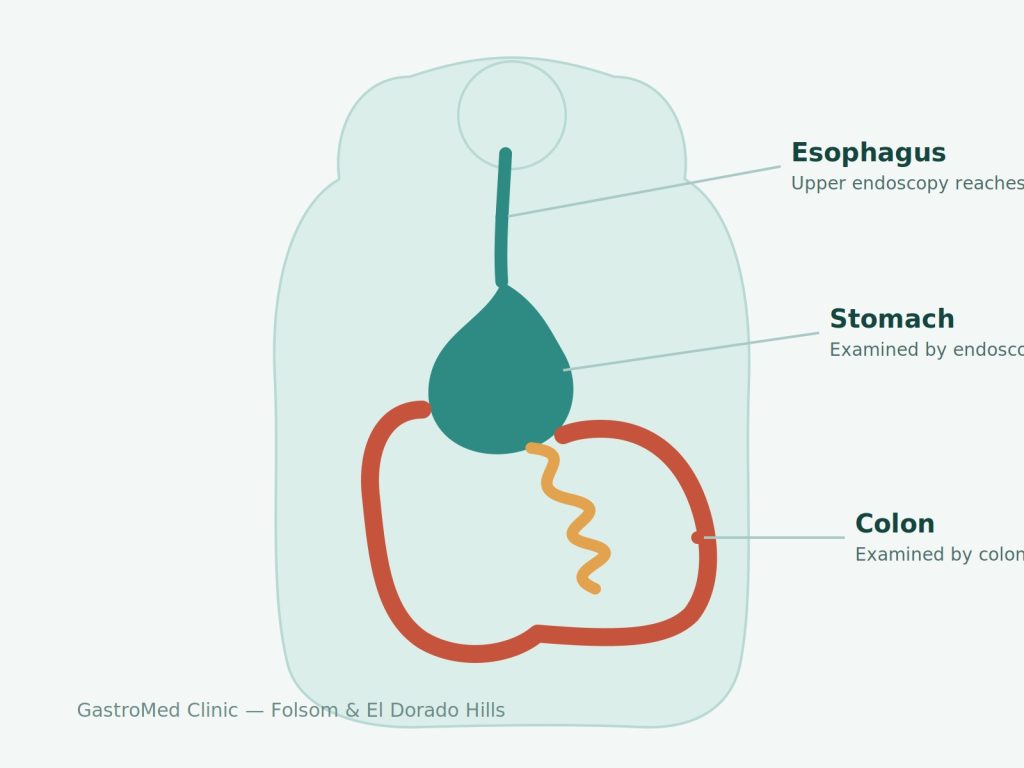
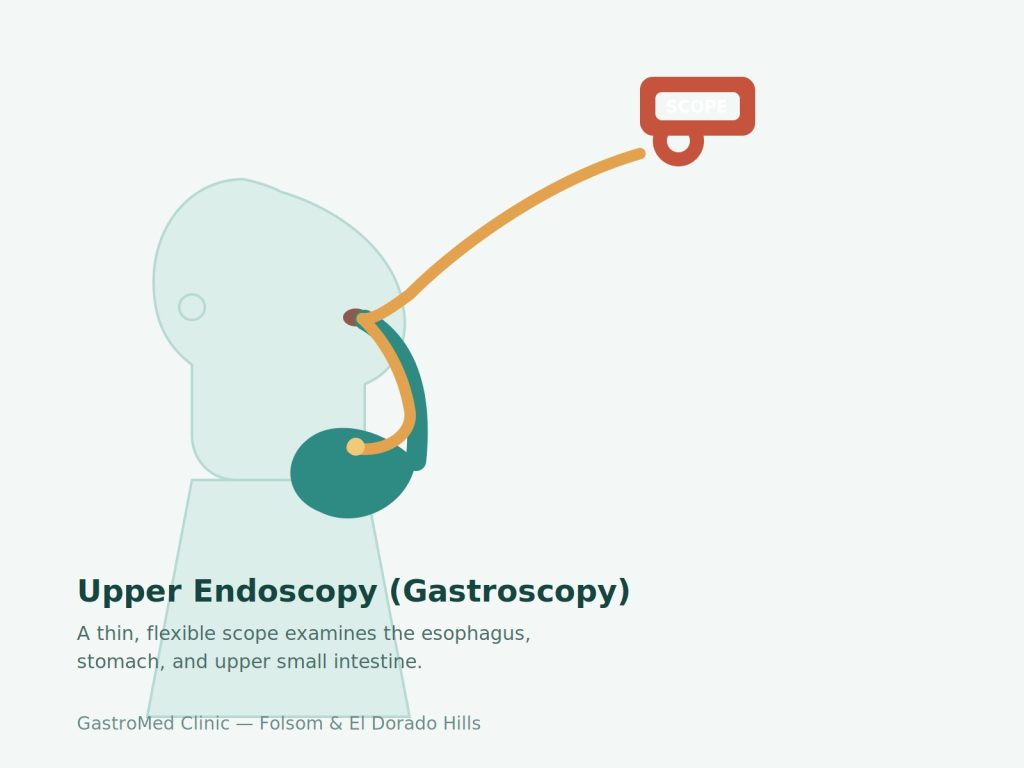
Here’s the short version: an upper endoscopy and a gastroscopy are the same procedure — “gastroscopy” is simply an older or more regionally common term for what U.S. gastroenterologists typically call an upper endoscopy (or EGD, short for esophagogastroduodenoscopy). Both involve a thin, flexible scope passed through the mouth to examine the esophagus, stomach, and the first part of the small intestine.
A colonoscopy is a different procedure entirely. It examines the large intestine (colon) using a scope inserted through the rectum, not the mouth. The confusion usually comes from the fact that both procedures use similar scope technology and often get lumped together as “endoscopic procedures” — but they look at completely different parts of your digestive system.
What Is an Upper Endoscopy?
An upper endoscopy lets your gastroenterologist directly visualize the upper digestive tract: the esophagus, stomach, and duodenum (the top portion of the small intestine). A thin tube with a camera on the end is guided down the throat while you’re under light sedation, so most patients feel little to nothing during the procedure.
Doctors typically order an upper endoscopy to investigate:
- Persistent heartburn or acid reflux
- Difficulty or pain swallowing
- Unexplained nausea or vomiting
- Unexplained weight loss
- Suspected ulcers, gastritis, or H. pylori infection
- Screening for Barrett’s esophagus in patients with long-term GERD
The procedure usually takes 15–30 minutes, and most patients go home the same day once the sedation wears off.
What Is a Gastroscopy?
As noted above, gastroscopy and upper endoscopy describe the same exam. The term “gastroscopy” comes from gastro- (stomach) and -scopy (to look at), and it’s more commonly used in the UK, Australia, and parts of Europe, while “upper endoscopy” or “EGD” is the more standard term in the United States. If your GastroMed Clinic gastroenterologist uses either term, rest assured you’re being scheduled for the same procedure with the same prep and recovery process.
What Is a Colonoscopy?
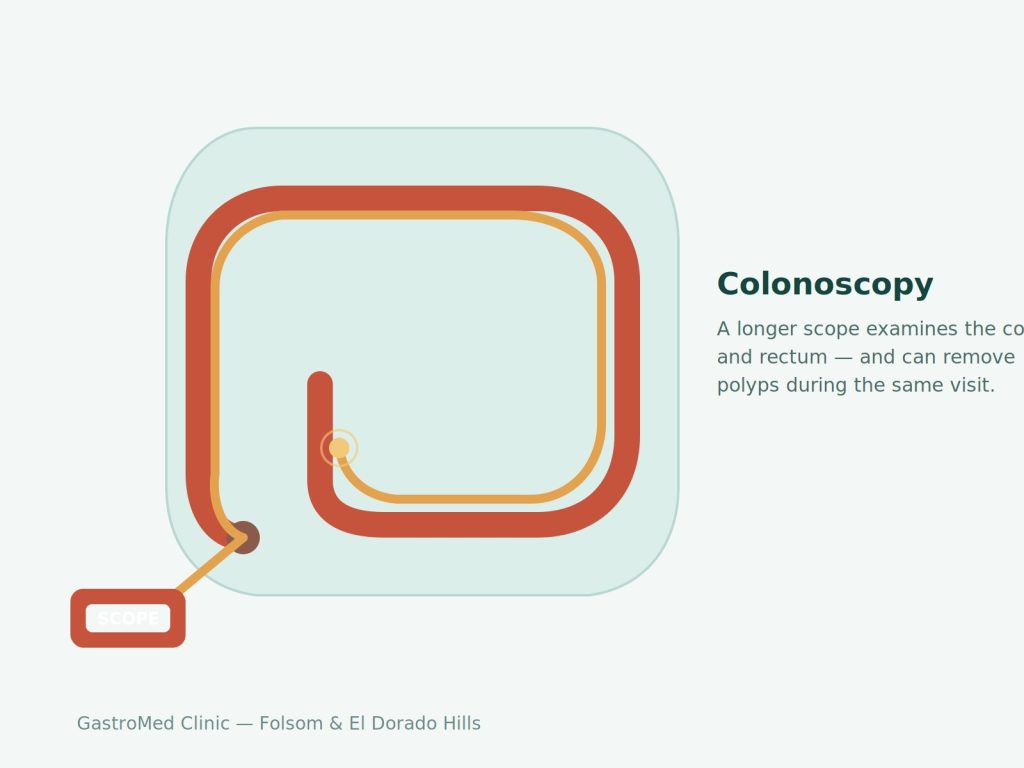
A colonoscopy examines the colon and rectum using a longer, flexible scope inserted through the rectum. It’s the gold-standard tool for colorectal cancer screening and for diagnosing conditions like inflammatory bowel disease, diverticulosis, and unexplained rectal bleeding.
Because the colon needs to be completely empty for a clear view, colonoscopy requires a more involved prep than an upper endoscopy — typically a clear liquid diet the day before and a prescribed bowel prep solution. The procedure itself takes about 20–45 minutes under sedation, and it’s the only one of the three procedures that allows doctors to remove polyps on the spot, before they have a chance to develop into cancer.
For a full walkthrough of what colonoscopy prep and screening involves, see our related post on colonoscopy doctors in Folsom and El Dorado Hills.
Key Differences at a Glance
| Upper Endoscopy (Gastroscopy) | Colonoscopy |
Area examined | Esophagus, stomach, duodenum | Colon and rectum |
Insertion point | Mouth | Rectum |
Common reasons | Reflux, ulcers, swallowing issues | Cancer screening, IBD, bleeding |
Prep required | Fasting (usually 6–8 hours) | Full bowel prep, clear liquid diet |
Typical duration | 15–30 minutes | 20–45 minutes |
Polyp removal possible | Occasionally (stomach polyps) | Yes, routinely |
Sometimes a doctor will recommend both procedures on the same day — often called a “double scope” — especially if you have symptoms affecting both ends of the digestive
How Cost and Coverage Compare
Cost varies based on your insurance plan, whether the procedure is diagnostic or preventive, and where it’s performed (hospital vs. outpatient surgical center). Preventive colonoscopies for patients 45 and older are typically covered at no cost under the Affordable Care Act’s preventive care provisions, while upper endoscopies are usually billed as diagnostic procedures tied to your specific symptoms. According to the National Institute of Diabetes and Digestive and Kidney Diseases, most insurance plans cover both procedures when medically necessary, but coverage details differ by carrier.
Our team at GastroMed Clinic can help verify your benefits before scheduling — reach out through our gastroenterology clinic contact page for a coverage check.
Which Procedure Might Your Doctor Recommend?
Your gastroenterologist will base the recommendation on your symptoms, age, and risk factors:
- Reflux, chest discomfort after eating, or trouble swallowing → upper endoscopy
- Age 45+, family history of colon cancer, or rectal bleeding → colonoscopy
- Both upper and lower GI symptoms → your doctor may suggest both in one visit
The American Society for Gastrointestinal Endoscopy recommends discussing your personal and family medical history with your provider so the right procedure — or combination — is chosen the first time.
If you’re still unsure which symptoms warrant a visit at all, our post on signs you need to see a gastroenterologist walks through the most common red flags.
Frequently Asked Questions
Is a gastroscopy the same as an upper endoscopy?
Yes. They refer to the same procedure — a scope examining the esophagus, stomach, and upper small intestine. “Gastroscopy” is more common outside the U.S., while American clinics typically say “upper endoscopy” or “EGD.”
Do I need to be sedated for an upper endoscopy or colonoscopy?
Most patients receive light-to-moderate sedation for both procedures to minimize discomfort. Your care team will review sedation options and any driving restrictions beforehand.
Do I need to be sedated for an upper endoscopy or colonoscopy?
Yes, this is common practice when a patient has symptoms warranting both exams, and it means only one prep day and one recovery period instead of two.
How long does it take to get results?
Your gastroenterologist can usually share initial findings right after the procedure. Biopsy results, if taken, typically take 3–7 business days.
Is upper endoscopy or colonoscopy more uncomfortable?
Most patients report the bowel prep for a colonoscopy is more inconvenient than the procedure itself; both exams are performed under sedation, so discomfort during the procedure is minimal for most patients.
If your doctor has recommended an upper endoscopy, colonoscopy, or both, the team at GastroMed Clinic in Folsom and El Dorado Hills is here to answer questions and get you scheduled.