• 1580 Creekside Dr. Suite 220 Folsom, CA 95630
  • (916) 983-4444 Make an appointment

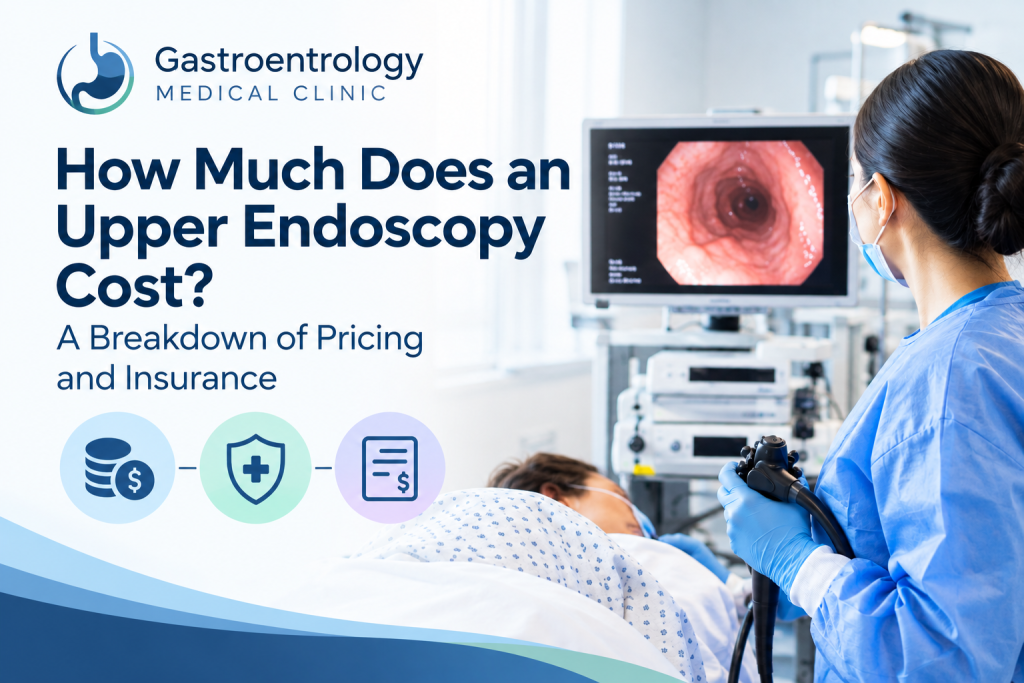
How Much Does an Upper Endoscopy Cost? A Breakdown of Pricing and Insurance

  1. Home
  2. 2026

How Much Does an Upper Endoscopy Cost? A Breakdown of Pricing and Insurance

If your doctor recommended an upper endoscopy, one of your first questions is probably about cost. It’s a fair question, since pricing for medical procedures rarely feels straightforward, and endoscopy is no exception. The good news: once you understand what actually drives the price, the numbers make a lot more sense.

At GastroMed Clinic, serving Folsom and El Dorado Hills, we get cost questions from patients almost as often as we get medical ones. So, this guide breaks down exactly what factors into an upper endoscopy’s price, what you can typically expect to pay, and how to get a clear estimate before you schedule.

Table of Contents

What Factors Into the Cost  

An upper endoscopy isn’t a single flat fee. Instead, several separate charges combine to make up your total bill:

  • Facility fee. This covers the cost of the room, equipment, and staff. It’s usually the largest single line item, and it varies depending on whether the procedure happens at a hospital, an outpatient surgical center, or an in-office suite.
  • Physician fee. This pays for your gastroenterologist’s time and expertise in performing the procedure.
  • Anesthesia fee. Most patients receive sedation, so an anesthesiologist or certified nurse anesthetist typically bills separately.
  • Biopsy and pathology fees. If your doctor takes a tissue sample during the exam, expect an additional lab fee to analyze it.
  • Pre-procedure testing. Occasionally, bloodwork or an EKG is required beforehand, especially for patients with certain health conditions.


Because these charges come from different providers, patients sometimes receive multiple separate bills after a single procedure. That’s normal, though it can be confusing if you’re not expecting it.

Average Cost Range: With and Without Insurance  

Nationally, an upper endoscopy typically costs somewhere between $1,000 and $3,500 without insurance, though prices swing widely based on geographic location, facility type, and whether a biopsy is performed. Outpatient surgical centers generally cost less than hospital-based procedures, sometimes by a significant margin, since hospitals carry higher overhead costs.

With insurance, your actual out-of-pocket cost depends heavily on your specific plan. Copays, deductibles, and coinsurance all play a role, and if you haven’t met your annual deductible yet, you may be responsible for a larger share of the bill upfront.

Diagnostic vs. Preventive: Why the Label Matters  

Here’s something many patients don’t realize: how your insurance classifies the procedure can meaningfully change your cost. Colonoscopies for patients 45 and older are often covered at no cost as a preventive screening under the Affordable Care Act. Upper endoscopies, however, work differently.

Because an upper endoscopy is almost always ordered to investigate specific symptoms, like persistent heartburn, difficulty swallowing, or unexplained pain, it’s typically billed as a diagnostic procedure rather than a preventive one. That distinction matters, since diagnostic procedures are usually subject to your deductible and coinsurance, while preventive procedures often aren’t. If you’re unclear on your GERD symptoms, our related post on bile reflux vs. acid reflux can help you describe them more precisely when you talk to your doctor or insurer.

According to the National Institute of Diabetes and Digestive and Kidney Diseases, upper endoscopy is one of the most common procedures used to diagnose conditions affecting the esophagus, stomach, and small intestine, which is exactly why insurers tend to require documented symptoms before approving coverage.
Questions to Ask Before Scheduling  

A few quick questions to your insurance provider can prevent billing surprises later:

  • Is an upper endoscopy covered under my plan, and is it classified as diagnostic or preventive?
  • Have I met my deductible for the year?
  • Is the facility, physician, and anesthesiologist all in-network?
  • Will a biopsy, if needed, be covered under the same visit or billed separately?
  • Do I need pre-authorization before scheduling?

Asking these questions upfront takes maybe ten minutes, but it can save you from an unexpected bill weeks later.

How to Get an Accurate Estimate at GastroMed  

Every patient’s situation is different, so the most reliable way to know your actual cost is to get a personalized estimate. At GastroMed Clinic, our team can verify your insurance benefits before you schedule, walk you through expected costs for your specific plan, and flag anything that might require pre-authorization.

If you’re also weighing whether you need an upper endoscopy, a colonoscopy, or both, our guide on upper endoscopy vs. gastroscopy vs. colonoscopy breaks down which procedure typically fits which symptoms. Reach out through our gastroenterology clinic contact page to start a coverage check.

Frequently Asked Questions  

How much does an upper endoscopy cost without insurance?

Typically between $1,000 and $3,500, depending on the facility type, location, and whether a biopsy is performed. Outpatient centers are usually less expensive than hospital-based procedures.

Most insurance plans cover upper endoscopy when it’s medically necessary to investigate symptoms. However, since it’s usually classified as diagnostic rather than preventive, you may still owe a copay, deductible, or coinsurance.

Separate providers, such as the facility, your gastroenterologist, and the anesthesiologist, typically bill independently. Receiving multiple bills for one procedure is normal.

Yes. If your doctor takes a tissue sample for analysis, a separate pathology lab fee usually applies in addition to the base procedure cost.

Yes. Most clinics, including GastroMed, can verify your insurance benefits and provide an estimated cost range before your procedure is scheduled.

If cost concerns have kept you from scheduling a recommended upper endoscopy, the team at GastroMed Clinic in Folsom and El Dorado Hills can help you understand your coverage before you commit to anything. According to the American Society for Gastrointestinal Endoscopy, early diagnosis through endoscopy often leads to simpler, less costly treatment down the line, so it’s worth getting a clear answer sooner rather than later.
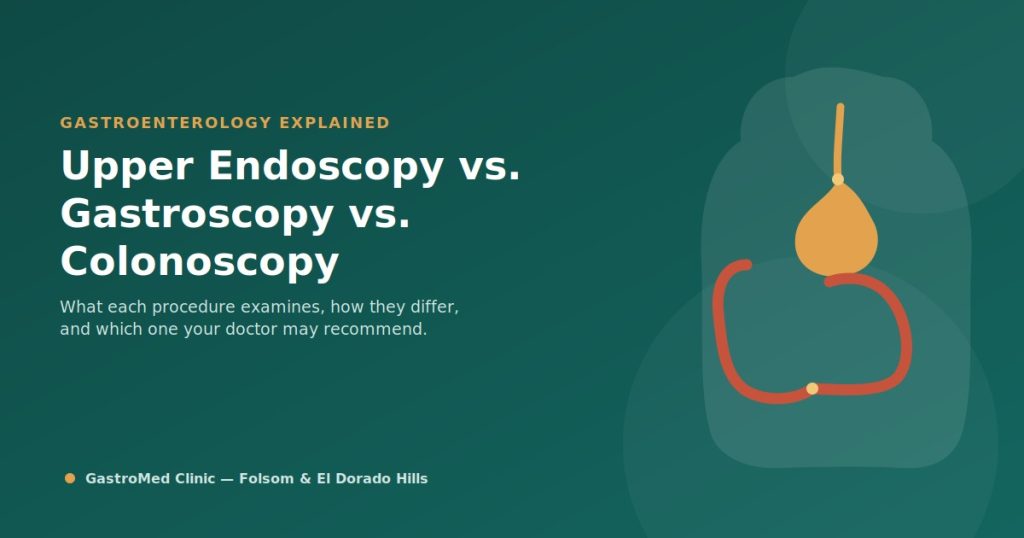
Upper Endoscopy vs. Gastroscopy vs. Colonoscopy: What’s the Difference?

If your doctor has mentioned an upper endoscopy, a gastroscopy, or a colonoscopy, you’re not alone in wondering how these procedures differ — or whether some of them are even different at all. Searches comparing these terms are common, and for good reason: the terminology overlaps in ways that trip up even attentive patients.

At GastroMed Clinic, serving Folsom and El Dorado Hills, we get asked about this almost every week. This guide breaks down what each procedure actually involves, clears up the naming confusion, and helps you understand what to expect if your gastroenterologist recommends one.

Table of Contents

Quick Answer: Are They the Same Procedure?  

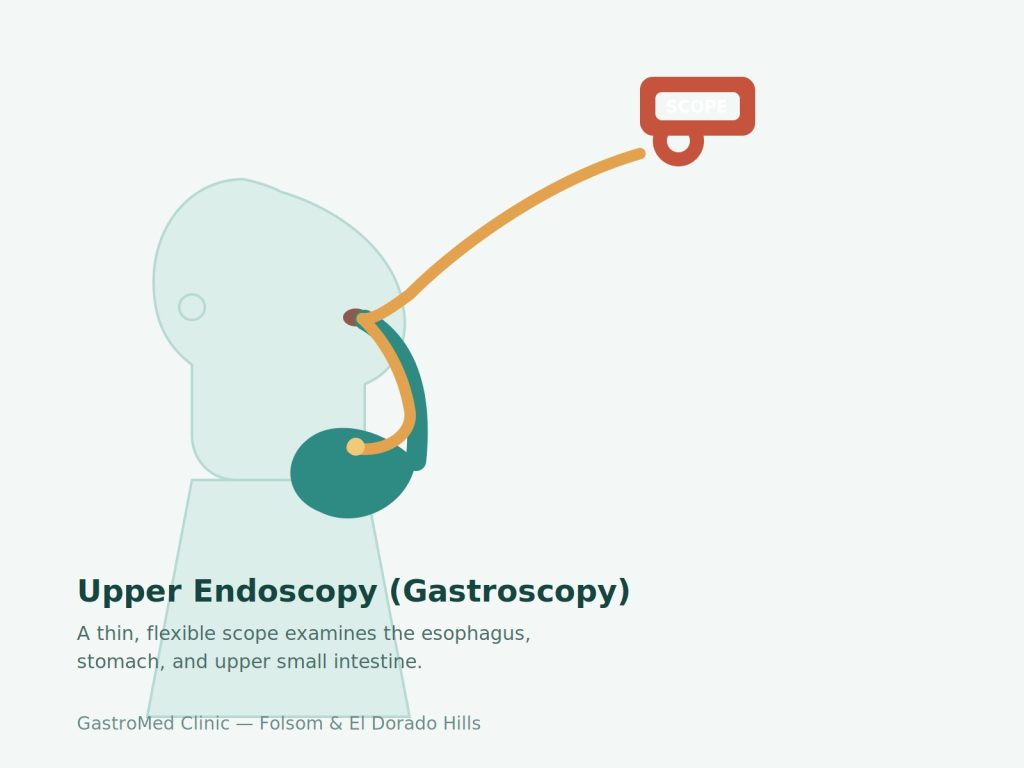
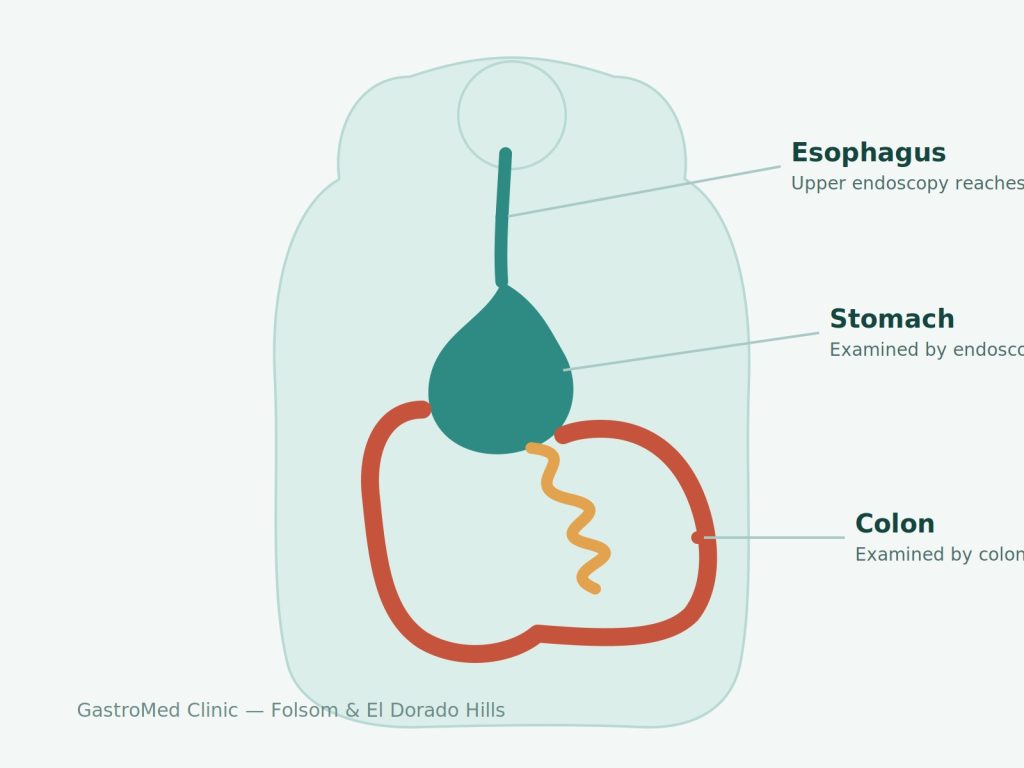
Here’s the short version: an upper endoscopy and a gastroscopy are the same procedure — “gastroscopy” is simply an older or more regionally common term for what U.S. gastroenterologists typically call an upper endoscopy (or EGD, short for esophagogastroduodenoscopy). Both involve a thin, flexible scope passed through the mouth to examine the esophagus, stomach, and the first part of the small intestine.

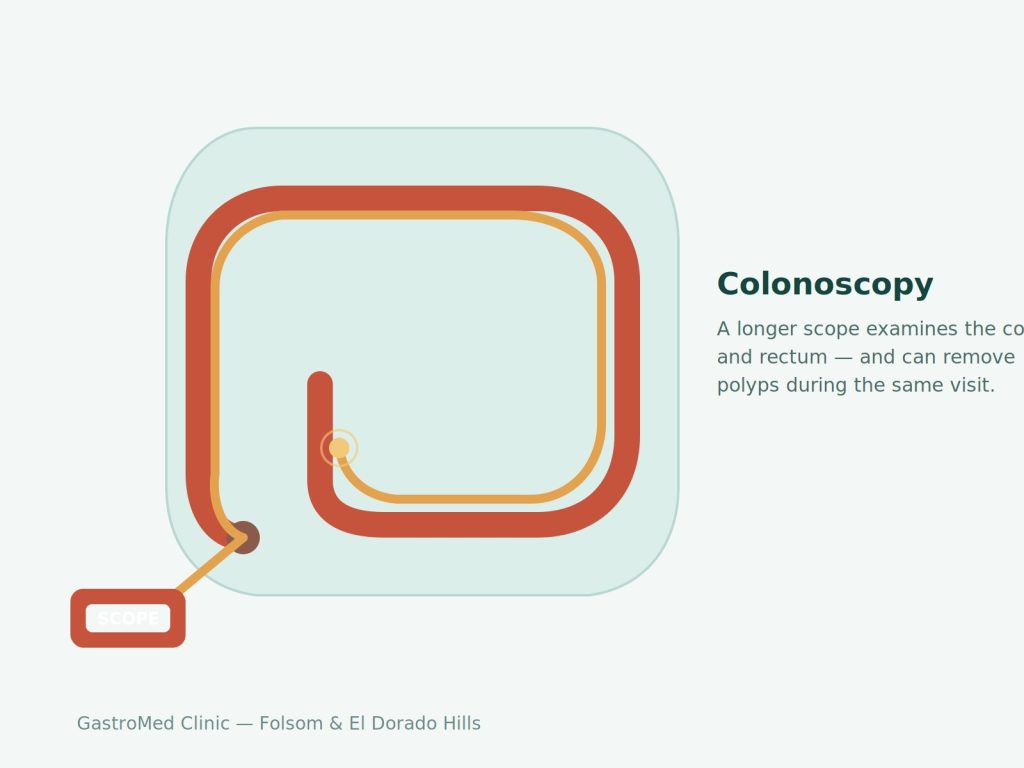
A colonoscopy is a different procedure entirely. It examines the large intestine (colon) using a scope inserted through the rectum, not the mouth. The confusion usually comes from the fact that both procedures use similar scope technology and often get lumped together as “endoscopic procedures” — but they look at completely different parts of your digestive system.

What Is an Upper Endoscopy?  

An upper endoscopy lets your gastroenterologist directly visualize the upper digestive tract: the esophagus, stomach, and duodenum (the top portion of the small intestine). A thin tube with a camera on the end is guided down the throat while you’re under light sedation, so most patients feel little to nothing during the procedure.

Doctors typically order an upper endoscopy to investigate:

  • Persistent heartburn or acid reflux
  • Difficulty or pain swallowing
  • Unexplained nausea or vomiting
  • Unexplained weight loss
  • Suspected ulcers, gastritis, or H. pylori infection
  • Screening for Barrett’s esophagus in patients with long-term GERD

The procedure usually takes 15–30 minutes, and most patients go home the same day once the sedation wears off.

What Is a Gastroscopy?  

As noted above, gastroscopy and upper endoscopy describe the same exam. The term “gastroscopy” comes from gastro- (stomach) and -scopy (to look at), and it’s more commonly used in the UK, Australia, and parts of Europe, while “upper endoscopy” or “EGD” is the more standard term in the United States. If your GastroMed Clinic gastroenterologist uses either term, rest assured you’re being scheduled for the same procedure with the same prep and recovery process.

What Is a Colonoscopy?  

A colonoscopy examines the colon and rectum using a longer, flexible scope inserted through the rectum. It’s the gold-standard tool for colorectal cancer screening and for diagnosing conditions like inflammatory bowel disease, diverticulosis, and unexplained rectal bleeding.

Because the colon needs to be completely empty for a clear view, colonoscopy requires a more involved prep than an upper endoscopy — typically a clear liquid diet the day before and a prescribed bowel prep solution. The procedure itself takes about 20–45 minutes under sedation, and it’s the only one of the three procedures that allows doctors to remove polyps on the spot, before they have a chance to develop into cancer.

For a full walkthrough of what colonoscopy prep and screening involves, see our related post on colonoscopy doctors in Folsom and El Dorado Hills.

Key Differences at a Glance  


Upper Endoscopy (Gastroscopy)

Colonoscopy

Area examined

Esophagus, stomach, duodenum

Colon and rectum

Insertion point

Mouth

Rectum

Common reasons

Reflux, ulcers, swallowing issues

Cancer screening, IBD, bleeding

Prep required

Fasting (usually 6–8 hours)

Full bowel prep, clear liquid diet

Typical duration

15–30 minutes

20–45 minutes

Polyp removal possible

Occasionally (stomach polyps)

Yes, routinely

Sometimes a doctor will recommend both procedures on the same day — often called a “double scope” — especially if you have symptoms affecting both ends of the digestive 

How Cost and Coverage Compare  

Cost varies based on your insurance plan, whether the procedure is diagnostic or preventive, and where it’s performed (hospital vs. outpatient surgical center). Preventive colonoscopies for patients 45 and older are typically covered at no cost under the Affordable Care Act’s preventive care provisions, while upper endoscopies are usually billed as diagnostic procedures tied to your specific symptoms. According to the National Institute of Diabetes and Digestive and Kidney Diseases, most insurance plans cover both procedures when medically necessary, but coverage details differ by carrier.

Our team at GastroMed Clinic can help verify your benefits before scheduling — reach out through our gastroenterology clinic contact page for a coverage check.

Which Procedure Might Your Doctor Recommend?  

Your gastroenterologist will base the recommendation on your symptoms, age, and risk factors:

  • Reflux, chest discomfort after eating, or trouble swallowing → upper endoscopy
  • Age 45+, family history of colon cancer, or rectal bleeding → colonoscopy
  • Both upper and lower GI symptoms → your doctor may suggest both in one visit

The American Society for Gastrointestinal Endoscopy recommends discussing your personal and family medical history with your provider so the right procedure — or combination — is chosen the first time.

If you’re still unsure which symptoms warrant a visit at all, our post on signs you need to see a gastroenterologist walks through the most common red flags.

Frequently Asked Questions  

Is a gastroscopy the same as an upper endoscopy?

Yes. They refer to the same procedure — a scope examining the esophagus, stomach, and upper small intestine. “Gastroscopy” is more common outside the U.S., while American clinics typically say “upper endoscopy” or “EGD.”

Most patients receive light-to-moderate sedation for both procedures to minimize discomfort. Your care team will review sedation options and any driving restrictions beforehand.

Yes, this is common practice when a patient has symptoms warranting both exams, and it means only one prep day and one recovery period instead of two.

Your gastroenterologist can usually share initial findings right after the procedure. Biopsy results, if taken, typically take 3–7 business days.

Most patients report the bowel prep for a colonoscopy is more inconvenient than the procedure itself; both exams are performed under sedation, so discomfort during the procedure is minimal for most patients.

If your doctor has recommended an upper endoscopy, colonoscopy, or both, the team at GastroMed Clinic in Folsom and El Dorado Hills is here to answer questions and get you scheduled. 

How to Choose the Right Team for Your Screening

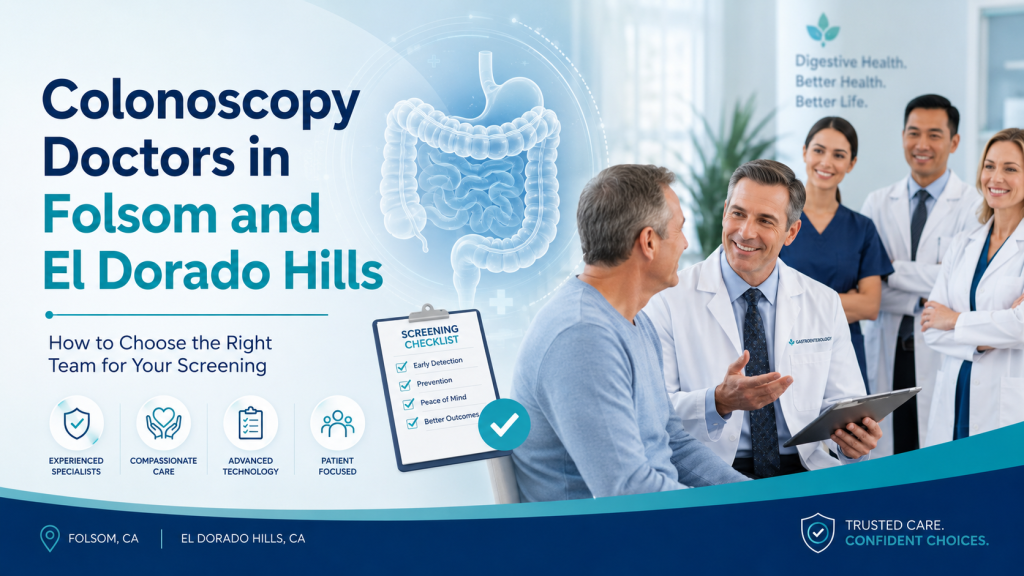
Scheduling a colonoscopy is one of those tasks that’s easy to put off — until you start researching and realize how much the choice of doctor actually matters. Not every clinic offering colonoscopies in Folsom has the same level of experience, the same technology, or the same approach to patient comfort. This guide breaks down what to look for in a colonoscopy provider, what current screening guidelines say, and why the physician performing your procedure matters just as much as the procedure itself.

Table of Contents

Why the Right Colonoscopy Doctor Matters

A colonoscopy isn’t just a screening checkbox — it’s a procedure where the skill of the physician directly affects outcomes. An experienced gastroenterologist is more likely to identify and remove precancerous polyps during the exam itself, called the adenoma detection rate, a metric that varies meaningfully between providers. Choosing a board-certified GI specialist who performs colonoscopies regularly, rather than a generalist who does them occasionally, is one of the most important decisions a patient can make.

Current Colorectal Cancer Screening Guidelines

In 2021, the American College of Gastroenterology updated its recommendations, lowering the suggested age to begin average-risk colorectal cancer screening from 50 to 45. The CDC’s colorectal cancer screening guidance reflects this same update, and notes that a standard screening colonoscopy is recommended every 10 years for average-risk adults with no findings. Patients with a first-degree relative diagnosed with colorectal cancer are often advised to begin screening earlier — sometimes as young as 40, or ten years before the age their relative was diagnosed.

If you fall into a higher-risk category, or simply aren’t sure where you stand, a consultation with a GI specialist is the best way to determine the right screening age and interval for your situation. You can review symptoms and screening basics in our patient education library.

What Sets an Experienced GI Team Apart

When comparing colonoscopy doctors in Folsom, a few factors are worth asking about directly:

  • In-house, accredited endoscopy facilities rather than outsourced surgical centers, which allows for more consistent quality control and a more personal patient experience.
  • Physician-performed procedures — confirm that a board-certified gastroenterologist, not a rotating provider, is performing your exam.
  • Clear pre-procedural communication, since confusing prep instructions are one of the most common reasons patients delay or avoid screening.
  • Continuity of care, meaning the same doctor who evaluates your results is available for follow-up if polyps are found or surveillance is needed.
  • 24/7 physician availability for any post-procedure questions or concerns.
  • At Gastroenterology Medical Clinic, procedures are performed in our own accredited Endoscopy Center by the same physicians who conduct your consultation — not handed off to an outside facility.

What to Expect: Prep, Procedure, and Recovery

Most colonoscopy anxiety comes from uncertainty about the prep process rather than the procedure itself. A good clinic will walk you through exactly what to eat and avoid in the days beforehand, provide clear instructions for the bowel prep solution, and explain what sedation options are available. The exam itself typically takes 20–30 minutes, and most patients go home the same day with a driver, resuming normal activity within 24 hours. Our pre-procedural instructions page covers this in detail so patients know what to expect before their appointment.

Choosing a Colonoscopy Clinic in Folsom and El Dorado Hills, CA   

Gastroenterology Medical Clinic has served Folsom and the Western Slope of El Dorado County since 1985. As a single-specialty group focused exclusively on digestive tract and liver disease, our physicians combine advanced endoscopic technology with the kind of personalized, relationship-based care that’s harder to find at larger multi-specialty practices. If you’re due for a screening or follow-up colonoscopy, you can schedule an appointment directly with our team.

Frequently asked questions

At what age should I get my first colonoscopy?

Current American College of Gastroenterology guidelines recommend average-risk adults begin screening at 45. Those with a family history of colorectal cancer may need to start earlier.

For average-risk patients with a normal result, the standard interval is every 10 years. Patients with polyps or other findings may need more frequent follow-up, typically every 3 to 5 years depending on what was found.

Most patients are sedated during the procedure and remember little to none of it. Mild bloating or cramping afterward is common but typically resolves within a day.

A dedicated gastroenterology clinic often means the same physician manages your consultation, procedure, and follow-up, with less handoff between providers compared to larger, multi-specialty systems.

Look for board certification, in-house accredited endoscopy facilities, transparent prep guidance, and a practice that emphasizes continuity of care — meaning you see the same doctor throughout the process rather than a different provider at each stage.

Gastroenterology Medical Clinic (GMC) has provided colonoscopy and endoscopy services to Folsom and El Dorado Hills patients since 1985. Our board-certified gastroenterologists perform procedures in our own accredited Endoscopy Center. Schedule your colonoscopy or call (916) 983-4444.

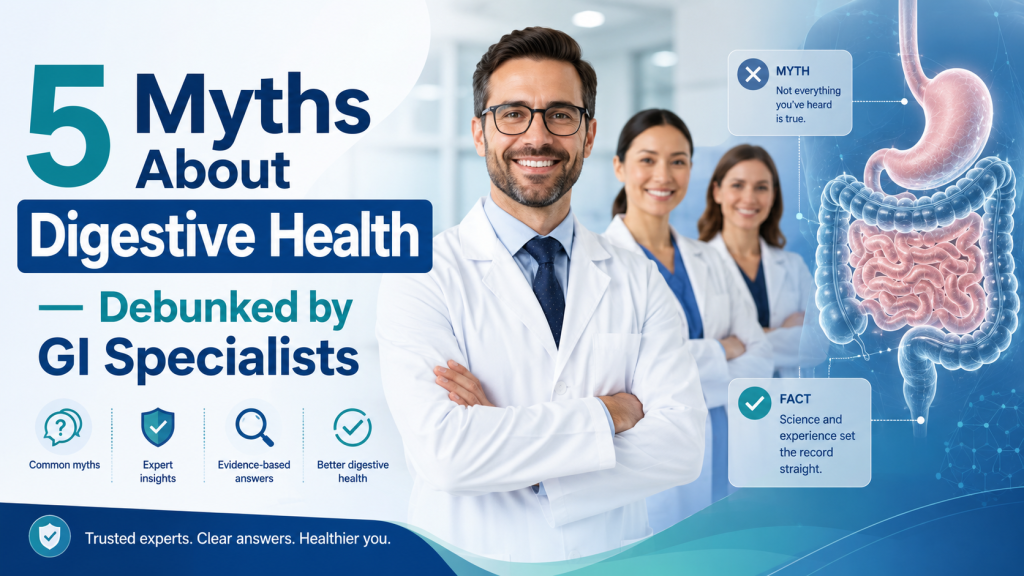
5 Myths About Digestive Health —Debunked by GI Specialists

Table of Contents

 INTRODUCTION 


When it comes to digestive health, misinformation is everywhere. Many people put off seeing a gastroenterologist because they believe myths that simply are not true — and those delays can have real consequences for their health.


At Gastroenterology Medical Clinic (GMC), we have been serving patients in Folsom and El Dorado Hills since 1985. In that time, our digestive health consultants have heard just about every misconception imaginable. Today, we are setting the record straight.


Here are the 5 most common myths about digestive health — and the truth behind each one.

MYTH #1: "I only need to see a GI specialist if I have symptoms." 


THE TRUTH:


Many of the most serious gastrointestinal conditions — including colorectal cancer, fatty liver disease, and Barrett’s esophagus — develop with little to no symptoms in their early stages. By the time symptoms appear, the disease may have already progressed significantly. Proactive screenings at a gastroenterology clinic in Folsom and El Dorado Hills like GMC can detect these conditions early, when they are most treatable and most curable. when they are most treatable and most curable.


This is the most dangerous myth of all. Waiting for pain or discomfort before seeing a digestive health consultant is like waiting for chest pain before getting your heart checked. Prevention and early detection are always better than late-stage treatment.


The American Cancer Society recommends colorectal cancer screening starting at age 45 for average-risk individuals — regardless of symptoms.. If you have a family history of GI conditions, your screening may need to start even earlier.


GMC Tip: Schedule a baseline GI consultation even if you feel perfectly fine. Early detection is the most powerful tool we have against serious digestive disease.


MYTH #2: "Colonoscopies are painful and something to dread." 


THE TRUTH:


Modern colonoscopies at GMC are performed with anesthesiologist-administered propofol sedation — the gold standard in patient comfort.Most patients report feeling nothing during the procedure and simply wake up when it is over. The preparation the day before has also improved significantly in recent years, with smaller volumes and better-tasting solutions available.


Fear of discomfort is one of the most common reasons people avoid colonoscopies — and one of the most unfounded. At Gastroenterology Medical Clinic, patient comfort is our top priority. Our state-of-the-art sedation services ensure that the procedure is as smooth and stress-free as possible.


A colonoscopy takes approximately 30 to 60 minutes. You will be sedated, relaxed, and unaware of the procedure. Most patients are back to their normal routines the very next day.


Did You Know? Colonoscopy is one of the only cancer screening tests that can actually prevent cancer — not just detect it. Removing precancerous polyps during the procedure stops cancer before it starts.


MYTH #3: "Digestive problems are just a normal part of aging.


THE TRUTH:


While it is true that some changes in digestion occur with age, persistent bloating, irregular bowel habits, heartburn, or abdominal discomfort are NOT simply something you should accept as normal. These symptoms can be signs of treatable conditions such as IBS, GERD, celiac disease, or even early-stage colorectal cancer. A gastrointestinal clinic can properly diagnose and treat these issues at any age.


Too many patients come to GMC after years of suffering through symptoms they believed were just “part of getting older.” In most cases, we can identify the root cause and provide effective treatment — dramatically improving quality of life.


Digestive health affects your energy levels, immune system, mental health, sleep quality, and more. You deserve to feel well at every age. Do not accept discomfort as inevitable.


GMC Insight: Whether you are 35 or 75, digestive symptoms that interfere with your daily life deserve a proper evaluation. Our team at GMC is here to help — not just manage, but resolve.


 MYTH #4: "If it were serious, I would know about it." 


THE TRUTH:


This is one of the most common — and most costly — misconceptions in digestive health. Colorectal cancer, hepatitis C, non-alcoholic fatty liver disease, and H. pylori infections can all progress for years without causing obvious pain or discomfort. By the time symptoms do appear, the condition is often in a more advanced stage that requires more aggressive treatment.


At GMC, we use advanced diagnostic tools — including high-definition endoscopy, wireless capsule endoscopy (PillCam), and biliary and pancreatic endoscopy (ERCP) — to detect what is not yet visible on the surface. These tools allow our digestive health consultants to identify issues at their earliest and most treatable stages.


The body is remarkably good at compensating for early-stage disease. That is why regular screenings by a qualified gastroenterology clinic are so important — your body may not give you a warning until it is much harder to treat.


Fact: Hepatitis C screening is recommended for all adults 18 and older, because hepatitis C can progress without obvious symptoms and may lead to serious liver complications.

 MYTH #5: "A healthy diet means I don't need a GI check-up." 


THE TRUTH:


A healthy diet is wonderful for your digestive system — but it does not eliminate your risk for gastrointestinal disease. Genetic factors, family history, environmental exposures, medications, and age all play significant roles in your GI health. Even patients with excellent diets and active lifestyles develop colorectal cancer, IBD, and liver disease. Diet supports health; it does not replace screenings.


We applaud every patient who prioritizes nutrition and an active lifestyle. But we also see patients every week who are surprised to learn that their healthy habits did not protect them from a GI condition that required treatment.


Think of a GI check-up like a dental cleaning — even if you brush and floss every day, you still need a professional assessment. The same logic applies to your digestive system.


– Diet reduces risk — it does not eliminate it

– Family history can override lifestyle factors

– Some GI conditions have no known dietary prevention

– Screenings catch what diet cannot prevent


GMC Tip: Pair your healthy lifestyle with regular GI screenings. Together, they give you the best possible protection against serious digestive disease.


FREQUENTLY ASKED QUESTIONS

How do I know if I need to see a digestive health consultant?

If you are 45 or older and have not had a colorectal cancer screening, that alone is reason to schedule a visit. Beyond screening age, symptoms like persistent bloating, heartburn, irregular bowel habits, unexplained weight loss, or a family history of GI conditions are all reasons to consult a specialist at GMC.


They are the same specialist. A digestive health consultant is a gastroenterologist — a physician who specializes in the diagnosis, treatment, and prevention of conditions affecting the digestive tract, liver, gallbladder, and pancreas.

A colonoscopy is one of the most effective colorectal cancer screening tools because it can detect cancer and remove precancerous polyps during the same procedure, helping prevent cancer before it starts. Learn more from the American Cancer Society’s colorectal cancer screening guidelines.


For average-risk individuals over 45, a colonoscopy is recommended every 10 years. If you have risk factors or a history of GI conditions, more frequent visits may be recommended. Our digestive health consultants will develop a personalized screening schedule for you.

GMC accepts most major insurance plans. Please call our office at (916) 983-4444 or visit gastromedclinic.com to verify your coverage before scheduling your appointment.

In many cases, yes. However, some insurance plans require a referral from your primary care physician. We recommend checking with your insurer or calling our office directly and we will help guide you through the process.

Absolutely. Gastroenterology Medical Clinic proudly serves patients throughout the Sacramento region, including Folsom, El Dorado Hills, and surrounding communities. We are conveniently located at 1580 Creekside Dr., Suite 220, Folsom, CA 95630.

Your first visit begins with a comprehensive consultation where our physician will review your health history, family history, lifestyle, and any current symptoms. From there, we will develop a personalized care and screening plan tailored specifically to you.

THE BOTTOM LINE: DON'T LET MYTHS DELAY YOUR CARE

Your digestive health is too important to leave to myths and misconceptions. Whether you are due for a routine screening, experiencing symptoms you have been ignoring, or simply want a professional assessment of your gut health, the team at Gastroenterology Medical Clinic is ready to help.


With over 40 years of experience serving Folsom and El Dorado Hills, GMC combines cutting-edge technology with compassionate, personalized care. Our digestive health consultants are here to be your long-term partners in wellness — not just a resource when things go wrong.


Don’t wait. Don’t assume. Don’t believe the myths. Schedule your visit with GMC today.


A Comprehensive Guide to Colonoscopy in Diagnosing Inflammatory Bowel Disease (IBD)

Table of Contents

What Is a Colonoscopy?  

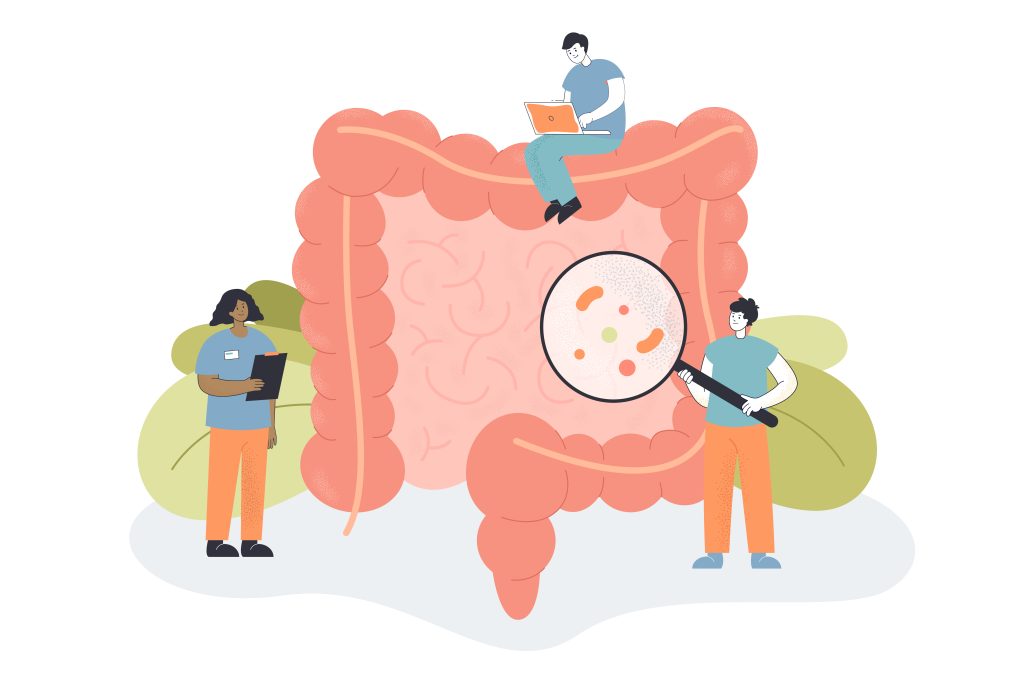
A colonoscopy is a diagnostic procedure that allows a gastroenterologist to examine the inner lining of the colon and rectum using a flexible camera. It is widely used to detect inflammation, ulcers, polyps, and early signs of colorectal disease.

At Gastroenterology Medical Clinic in Folsom and El Dorado Hills, colonoscopy procedures are performed using advanced technology to ensure accuracy, comfort, and patient safety.

What Is Inflammatory Bowel Disease (IBD)?  

Inflammatory Bowel Disease (IBD) refers to chronic inflammation of the digestive tract. The two primary types include:

  • Crohn’s Disease – Can affect any part of the digestive system
  • Ulcerative Colitis – Limited to the colon and rectum

IBD is a long-term condition that requires accurate diagnosis and ongoing management, making colonoscopy a critical step in care.

Why Colonoscopy Is Essential for Diagnosing IBD  

A colonoscopy is the most reliable and comprehensive method for diagnosing IBD.

Key Advantages:  

  • Directly identifies inflammation and intestinal damage
  • Differentiates between Crohn’s disease and ulcerative colitis
  • Enables biopsy collection for laboratory analysis
  • Detects complications such as bleeding or narrowing of the colon


This procedure provides real-time, detailed insights that other tests cannot match.

Symptoms That May Require a Colonoscopy  

If you are experiencing any of the following symptoms, a colonoscopy may be recommended:

  • Persistent diarrhea
  • Abdominal pain or cramping
  • Blood in stool
  • Unexplained weight loss
  • Chronic fatigue
  • Urgency or frequent bowel movements


Patients in Folsom and El Dorado Hills experiencing these symptoms should seek evaluation promptly to prevent complications.

What to Expect Before, During, and After a Colonoscopy  

Before the Procedure  

  • Follow a clear liquid diet
  • Complete a bowel preparation regimen
  • Adjust medications if instructed

During the Procedure  

  • Performed under light sedation
  • Takes approximately 30–60 minutes
  • Minimal discomfort for most patients

After the Procedure  

  • Temporary bloating or gas may occur
  • Resume normal activities within 24 hours
  • Results and next steps are discussed with your doctor 

Risks and Benefits of Colonoscopy  

Benefits  

  • Early detection of IBD and colorectal cancer
  • Accurate diagnosis and treatment planning
  • Preventative health screening

Risks (Rare)  

  • Bleeding
  • Perforation
  • Sedation-related reactions

When performed by experienced specialists, colonoscopy is safe, effective, and highly beneficial.

Colonoscopy Services in Folsom & El Dorado Hills  

At Gastroenterology Medical Clinic, we specialize in diagnosing and treating digestive conditions, including Inflammatory Bowel Disease (IBD).

Why Patients Choose Us:  

  • Board-certified gastroenterologists
  • Advanced diagnostic equipment
  • Personalized care plans
  • Convenient locations in Folsom, CA and El Dorado Hills, CA

We are committed to helping patients achieve better digestive health through accurate diagnosis and compassionate care.

Frequently Asked Questions (FAQ)  

Is a colonoscopy painful?

No. Patients are typically sedated and experience little to no discomfort during the procedure.

The procedure usually takes 30 to 60 minutes, followed by a short recovery period.

If you have ongoing symptoms such as diarrhea, abdominal pain, or blood in your stool, consult a gastroenterologist promptly.

Yes. It is the gold standard for diagnosing IBD and determining its severity.

Monitoring frequency varies, but many patients need follow-ups every 1 to 3 years.

While other tests exist, colonoscopy remains the most accurate and comprehensive 

You can schedule a consultation with Gastroenterology Medical Clinic, serving patients in both Folsom and El Dorado Hills, California.

Final Thoughts

A colonoscopy plays a vital role in diagnosing inflammatory bowel disease and protecting long-term digestive health. Early detection leads to better outcomes and improved quality of life.

If you are experiencing symptoms or need screening, trust Gastroenterology Medical Clinic in Folsom and El Dorado Hills for expert care and accurate diagnosis.

Gastroenterology Clinic in Folsom & El Dorado Hills – Services & What to Expect

Table of Contents

What Is a Gastroenterology Clinic?  

A gastroenterology clinic is a specialized medical facility focused on diagnosing, treating, and preventing conditions related to the digestive system. This includes the esophagus, stomach, intestines, liver, pancreas, and gallbladder.

At GastroMed Clinic, patients in Folsom and El Dorado Hills receive comprehensive care from experienced gastroenterologists who specialize in managing both common and complex digestive conditions. Whether you’re experiencing ongoing symptoms or seeking preventive screening, our clinic provides personalized, patient-centered care.


Explore our full range of treatments

What Services Does a Gastroenterology Clinic Provide?  

Gastroenterologists diagnose and treat a wide range of digestive conditions, including:

  • Gastroesophageal reflux disease (GERD)
  • Irritable bowel syndrome (IBS)
  • Inflammatory bowel disease (IBD)
  • Peptic ulcers
  • Gallbladder disease
  • Liver disorders
  • Colon polyps and colorectal cancer

According to the gastroenterology digestive disorders information from the American College of Gastroenterology, early diagnosis plays a critical role in improving outcomes


Learn about our diagnostic services

Common Conditions Treated by Gastroenterologists

Gastroenterologists treat:

  • GERD
  • IBS
  • Ulcers
  • Gallbladder disease
  • Liver disorders

For trusted medical information, visit

Additionally, the American College of Gastroenterology provides detailed guidance on digestive conditions and treatment options.

Diagnostic Procedures You Should Know  

A modern gastroenterology clinic uses advanced procedures to diagnose digestive conditions accurately.

Colonoscopy  

A colonoscopy allows doctors to examine the colon for polyps, inflammation, or cancer. It is one of the most important preventive tools in digestive health.

Upper Endoscopy  

This procedure examines the esophagus, stomach, and upper intestine to detect ulcers, inflammation, or abnormalities.

Laboratory & Imaging Tests  

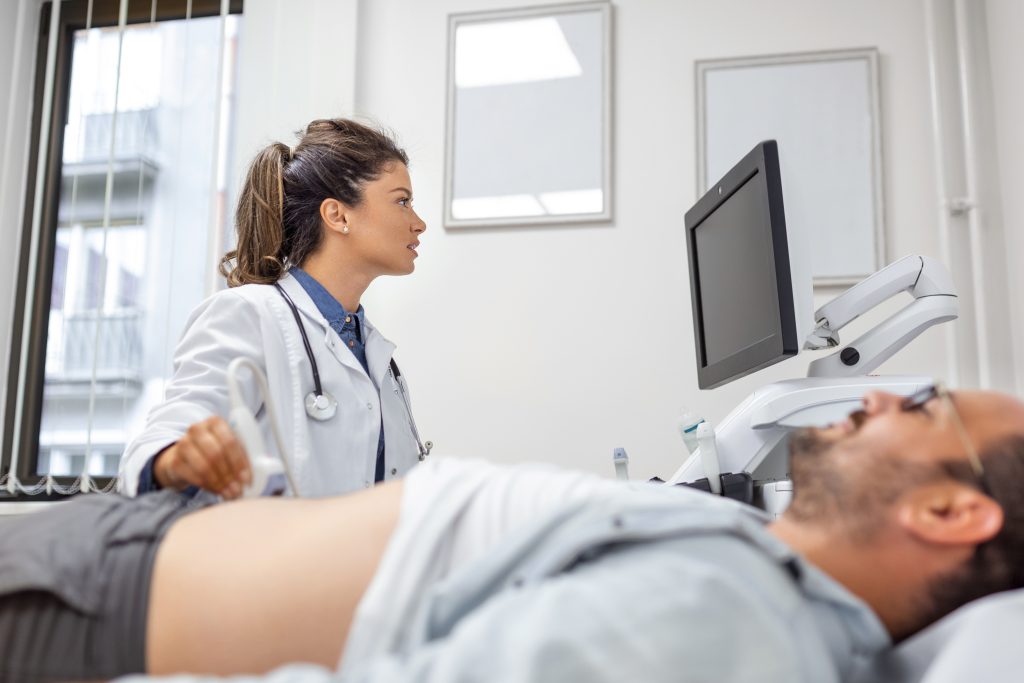
Blood work, stool tests, and imaging studies help identify infections, inflammation, or organ dysfunction.

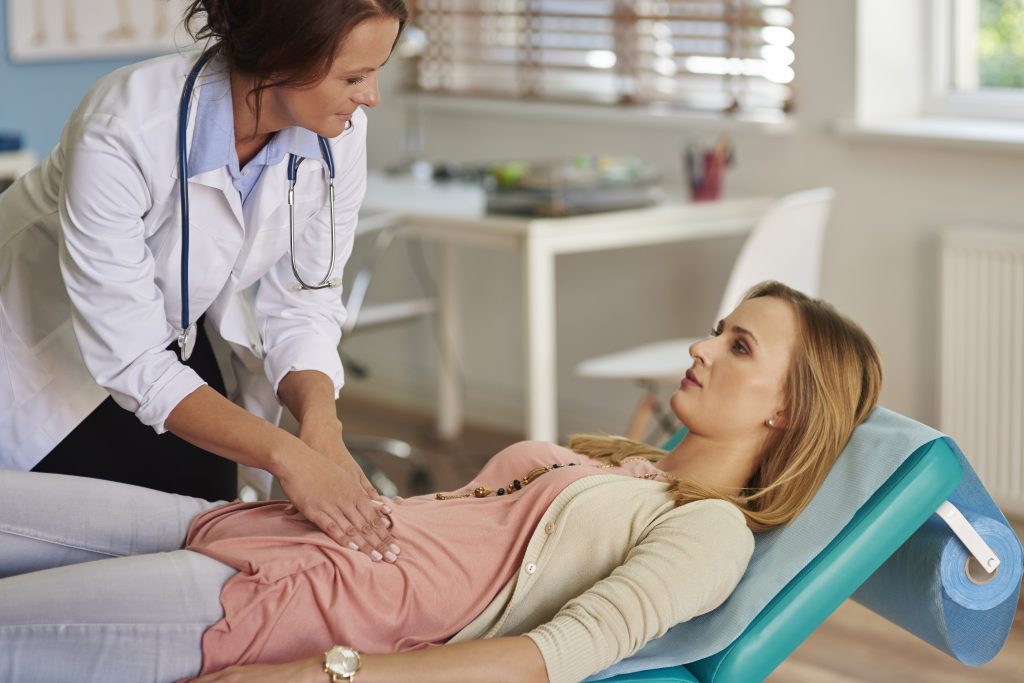
What to Expect During Your Visit  

When you visit a gastroenterology clinic, your appointment typically includes:

1. Medical History Review  

Your doctor will discuss symptoms, lifestyle, and family history.

2. Physical Examination  

A basic exam to evaluate your condition.

3. Diagnostic Recommendations  

Additional tests or procedures if needed.

4. Personalized Treatment Plan  

A clear plan tailored to your health needs.

Meet our gastroenterology specialists

Why Preventive Care Matters  

Many digestive conditions develop silently without noticeable symptoms.

Routine screenings — especially colonoscopy — can:

  • Detect early signs of disease
  • Prevent complications
  • Reduce the risk of colorectal cancer


Preventive care is one of the most effective ways to maintain long-term digestive health, especially for patients in Folsom and El Dorado Hills seeking proactive healthcare solutions.

Why Choose GastroMed Clinic in Folsom & El Dorado Hills  

Patients trust GastroMed Clinic because we provide:

✔ Comprehensive gastroenterology services
✔ Advanced diagnostic procedures
✔ Experienced gastroenterologists
✔ Personalized treatment plans
✔ Convenient access for patients in Folsom & El Dorado Hills

Whether you need a routine screening or treatment for ongoing symptoms, our team is dedicated to delivering high-quality digestive care.

📅 Schedule your appointment today:
👉 https://www.gastromedclinic.com/

Frequently Asked Questions (SEO + AI Optimized)  

1. What does a gastroenterology clinic treat?

A gastroenterology clinic treats conditions affecting the digestive system, including GERD, IBS, ulcers, liver disease, gallbladder issues, and colorectal cancer.

You should visit if you have persistent digestive symptoms such as abdominal pain, bloating, changes in bowel habits, or chronic heartburn.

This depends on your insurance. Some plans require a referral, while others allow direct scheduling with GastroMed Clinic.

Common procedures include colonoscopy, upper endoscopy, lab testing, and imaging studies.

Yes. Preventive screening is recommended starting at age 45, even without symptoms.

Look for experienced specialists, comprehensive services, advanced technology, and strong patient reviews — like GastroMed Clinic.

12 Signs You Need a Gastroenterologist

Table of Contents

 What Is a Gastroenterologist?   

A gastroenterologist is a medical doctor who specializes in diagnosing and treating disorders of the digestive system. This includes the esophagus, stomach, small intestine, colon, liver, gallbladder, pancreas, and rectum.

At GastroMed Clinic, our gastroenterology team focuses on both preventive care and advanced treatment for a wide range of gastrointestinal conditions. From chronic acid reflux to colon cancer screening, our goal is to help patients maintain long-term digestive health.

If you’ve been searching for a gastroenterologist near me or a trusted gastrointestinal clinic in Folsom, understanding when to seek care is the first step.

 Why Digestive Symptoms Should Never Be Ignored   

Digestive discomfort is common — but persistent symptoms are not normal.

Many serious gastrointestinal diseases begin with subtle warning signs. Ignoring them can lead to complications such as:

  • Internal bleeding
  • Chronic inflammation
  • Nutritional deficiencies
  • Ulcers
  • Liver disease
  • Colon cancer

Early evaluation by a gastroenterology specialist can prevent long-term damage and provide peace of mind.

 12 Signs You Should See a Gastroenterologist   

 1. Persistent Heartburn or Acid Reflux   

Frequent heartburn that lasts for weeks or does not respond to medication may indicate GERD or esophageal damage.

 2. Chronic Abdominal Pain   

Ongoing stomach pain could signal ulcers, gallbladder disease, IBS, inflammatory bowel disease (IBD), or other conditions requiring specialist care.

 3. Difficulty Swallowing (Dysphagia)   

Trouble swallowing food or feeling like food is stuck in your throat may indicate narrowing of the esophagus or inflammation.

 4. Changes in Bowel Habits   

New constipation, diarrhea, or alternating bowel patterns that last more than two weeks should be evaluated.


 5. Blood in Stool   

Red blood or black, tarry stools may indicate internal bleeding. This is never something to ignore.

 6. Unexplained Weight Loss   

Losing weight without trying can be a sign of malabsorption, chronic inflammation, or more serious gastrointestinal disorders.

 7. Persistent Bloating   

Severe bloating may indicate food intolerance, bacterial overgrowth, or inflammatory conditions.

 8. Ongoing Nausea or Vomiting   

Frequent nausea can be related to ulcers, gallbladder issues, stomach disorders, or obstruction.

 9. Family History of Colon Cancer   

If colon cancer runs in your family, you may need earlier or more frequent screening.

 10. Chronic Fatigue With Digestive Symptoms   

Fatigue combined with digestive problems may indicate anemia due to internal bleeding.

 11. Yellowing of Skin or Eyes (Jaundice)   

Jaundice can signal liver or bile duct disorders and requires immediate evaluation.

 12. You’re 45 or Older and Haven’t Had a Colonoscopy   

Routine colonoscopy screening is recommended starting at age 45. Preventive screening is one of the most effective tools in reducing colorectal cancer risk.

At GastroMed Clinic, we provide comprehensive colonoscopy services and personalized screening recommendations.

 When Symptoms Become Urgent   

Seek immediate medical attention if you experience:

  • Severe or sudden abdominal pain
  • Vomiting blood
  • Black or tarry stools
  • Signs of dehydration
  • Persistent high fever with digestive symptoms

If you are unsure whether your symptoms are serious, contact GastroMed Clinic for guidance

 What to Expect at a Gastroenterology Clinic   

Visiting a gastroenterology clinic may include:

  • Detailed medical history review
  • Physical examination
  • Blood tests or stool testing
  • Imaging studies
  • Colonoscopy or upper endoscopy (if recommended)

Your gastroenterologist will create a personalized treatment plan based on your diagnosis.

At GastroMed Clinic in Folsom, we combine advanced diagnostic technology with compassionate, patient-centered care.

 The Importance of Preventive Screenings   

Many gastrointestinal conditions develop quietly over time.

Routine screenings such as:

  • Colonoscopy
  • Upper endoscopy
  • Liver function testing

can detect early changes before symptoms worsen.

Colorectal cancer, in particular, is highly preventable with regular screening. Detecting and removing polyps early can significantly reduce cancer risk.

 Why Choose GastroMed Clinic?   

Patients trust GastroMed Clinic because we provide:

✔ Comprehensive gastroenterology services
✔ Advanced diagnostic procedures
✔ Preventive colon cancer screening
✔ Experienced digestive health specialists
✔ Local care in Folsom

Whether you need evaluation for symptoms or preventive screening, our team is committed to delivering expert digestive care.

Schedule an appointment today

 Frequently Asked Questions   

When should I see a gastroenterologist?

You should see a gastroenterologist if digestive symptoms persist for more than two weeks, worsen, or interfere with daily life

Gastroenterologists treat GERD, IBS, IBD, ulcers, colon polyps, liver disease, gallbladder disorders, and colorectal cancer.

This depends on your insurance plan. Some plans require a referral, while others allow direct scheduling.

Most adults should begin screening at age 45. Those with a family history may need earlier screening.

Some mild issues may improve, but persistent or worsening symptoms should always be evaluated.

Beyond the Burn: How a Digestive Health Consultant Uncovers Silent Gut Issues

When most people think of a visit to a gastro medical clinic, they imagine seeking relief for obvious discomfort like bloating or sharp pain. However, digestive health is often more complex than a single symptom. For many in Folsom, the most significant health breakthroughs happen when a digestive health consultant looks beyond the immediate “burn” to find the underlying cause of persistent issues.

Table of Contents

The Complex Gallbladder and Acid Reflux Connection  

One of the most frequent reasons for a visibility gain in modern gastroenterology is the growing awareness of the gallbladder and acid reflux connection. While many patients assume their chest pain is standard GERD, the reality is often found in the biliary system.

  • Bile Reflux vs. Acid Reflux: Standard acid reflux involves stomach acid, but when the gallbladder is dysfunctional, bile can back up into the stomach, causing a similar burning sensation that does not respond to typical over-the-counter antacids.
  • Silent Gallstones: You can have gallbladder issues without a dramatic “attack.” These silent stones can cause chronic inflammation that disrupts the entire digestive tract.
  • The Diagnostic Advantage: A specialized gastro medical clinic uses advanced imaging to differentiate between these two conditions, ensuring you aren’t treating the wrong organ.

Why "Wait and See" Isn't a Strategy  

Recent data shows that while interest in clinics is rising, many people are seeing a “visibility loss” in their own health by delaying screenings. Terms like gastroenterologist and digestive health consultants have seen a slight dip in search visibility, suggesting that some may be ignoring the “silent” signs of gut trouble.

At our Folsom gastroenterology clinic, we encourage a proactive approach. Waiting for severe symptoms can lead to more invasive procedures later. A consultation can identify:

  1. Early Malabsorption Issues: Finding out why you feel fatigued after eating.

  2. Inflammatory Triggers: Identifying specific foods that are causing low-grade gut damage.

  3. Preventive Screening Needs: Determining exactly when you should schedule your next colonoscopy.

The Role of a Colonoscopy in Total Wellness  

While the search for colonoscopy doctors in Folsom, CA has seen a slight decrease in visibility, the medical importance of the procedure remains the gold standard for preventive care. A colonoscopy near me isn’t just a test for cancer; it is a comprehensive look at the health of your colon that can explain issues like chronic constipation, diarrhea, or unexplained weight loss.

Trusted Care at Folsom’s Premier Gastro Medical Clinic  

Despite shifts in search trends, the gastro medical clinic remains a top performer for patient trust in the Folsom area. We bridge the gap between feeling “fine” and achieving optimal digestive wellness. By focusing on the gallbladder and acid reflux connection and maintaining a rigorous schedule for colonoscopy screenings, our team ensures that no silent issue goes unnoticed.

Take the Next Step in Your Health Journey Are you ready to look beyond the surface of your symptoms? Contact our gastroenterology clinic today. Our digestive health consultants are here to provide the clarity and relief you deserve

Frequently Asked Questions: Gastrointestinal Health in Folsom  

What is the connection between my gallbladder and acid reflux?

Many patients are surprised to learn about the gallbladder and acid reflux connection. While traditional acid reflux is caused by stomach acid entering the esophagus, gallbladder dysfunction can lead to “bile reflux”. This occurs when bile backs up into the stomach, mimicking the burning sensation of heartburn but often requiring different clinical treatment than standard GERD.

A digestive health consultant at a specialized gastro medical clinic has the advanced diagnostic tools necessary to uncover “silent” issues. While a general practitioner can treat basic symptoms, a specialist investigates the root cause of chronic bloating, abdominal pain, or persistent reflux to prevent long-term damage.

Generally, adults should begin screening at age 45, though those with a family history of colorectal issues may need to start sooner. If you are searching for a colonoscopy near me, our Folsom gastroenterology clinic provides comprehensive screenings that are essential for the early detection and prevention of colon cancer.

You should consider scheduling an appointment at our gastro medical clinic if you experience any of the following:

  • Persistent heartburn or “acid reflux” that doesn’t respond to over-the-counter medicine.
  • Unexplained changes in bowel habits.
  • Frequent abdominal pain or bloating.

A need for a routine preventive colonoscopy

Yes. At our Folsom facility, we utilize the latest clinical protocols to ensure the colonoscopy prep process is as efficient and comfortable as possible. Modern prep solutions are typically lower in volume and more palatable than older versions, making it easier for patients to complete the necessary steps for a clear screening.

Choosing the Right Colonoscopy Clinic: A Patient’s Guide for 2026

Finding the right colonoscopy provider is one of the most important steps you can take for long-term digestive health. As screening guidelines evolve and technology advances, patients searching for colonoscopy doctors in Folsom, CA need more than just proximity—they need expertise, trust, and modern care.

This 2026 patient guide explains what to look for in a Folsom gastroenterology clinic, what to expect from a modern colonoscopy, and why early screening continues to save lives.

At GastroMed Clinic, we believe informed patients make healthier decisions.

Why Colonoscopy Screening Is Still Essential in 2026  

Despite advances in non-invasive testing, colonoscopy remains the gold standard for colorectal cancer prevention. It is the only screening method that both detects and removes precancerous polyps during the same procedure.

In 2026, medical experts continue to recommend colonoscopy for:

  • Adults age 45 and older
  • Individuals with family history of colorectal cancer
  • Patients with ongoing digestive symptoms

Choosing the right colonoscopy clinic plays a key role in accurate diagnosis and prevention.

What Defines a High-Quality Colonoscopy Clinic  

A reputable Folsom gastroenterology clinic should meet several important standards:

  • Board-certified gastroenterologists
  • Advanced imaging and diagnostic equipment
  • Clear safety and sedation protocols
  • Personalized patient education and follow-up care
  • Clean, accredited medical facilities

At GastroMed Clinic, our approach is centered on both medical excellence and patient comfort.

How to Find the Best Colonoscopy Doctors in Folsom, CA  

When researching colonoscopy doctors in Folsom, CA, patients should consider:

  • Years of experience performing colonoscopies
  • Specialized GI training and certifications
  • Ability to clearly explain results and next steps
  • Strong patient satisfaction and local reputation

A skilled gastroenterologist ensures not only accurate screening but also peace of mind throughout the process.

Searching “Colonoscopy Near Me”: What Really Matters  

Many patients start their search with “colonoscopy near me gastroenterologist”, but quality should always outweigh convenience.

In 2026, top clinics offer:

  • Streamlined scheduling and reduced wait times
  • Comprehensive pre-procedure consultations
  • Comfortable sedation options
  • Efficient recovery and post-procedure guidance

GastroMed Clinic provides patient-focused care designed to minimize stress while maximizing accuracy.

The Colonoscopy Experience: From Prep to Recovery  

Understanding the process can ease anxiety. A modern colonoscopy typically includes:

Before the Procedure

  • Clear dietary and preparation instructions
  • Medication review with your provider

During the Procedure

  • Short procedure time (usually 20–30 minutes)
  • Sedation for comfort

After the Procedure

  • Same-day discharge
  • Results discussion and follow-up plan 

Modern advancements have made colonoscopy safer, faster, and more comfortable 

Why GastroMed Clinic Is a Trusted Folsom GI Provider  

Patients throughout Folsom choose GastroMed Clinic because we offer:

  • Experienced and compassionate gastroenterologists
  • Advanced diagnostic technology
  • Individualized digestive health care
  • A strong focus on prevention and education

Our mission is to support lifelong digestive health through early detection and expert GI care.

Frequently Asked Questions (FAQ)  

At what age should I schedule my first colonoscopy?

Most adults should begin screening at age 45, or earlier if they have risk factors or a family history of colorectal cancer.

Yes. Colonoscopy is a routine, safe procedure when performed by experienced gastroenterologists using modern equipment.

Most patients return to normal activities the next day, though sedation may require rest for the remainder of the procedure day.

Yes. Colonoscopy can remove precancerous polyps before they develop into cancer, making it a powerful preventive tool.

You can schedule a consultation with a trusted Folsom gastroenterology clinic by visiting
👉 https://www.gastromedclinic.com/

8105 Saratoga Way Suite 210 El Dorado Hills, CA 95762
1580 Creekside Dr. Suite 220 Folsom, CA 95630
(916) 983-4444


Schedule: Monday-Friday
8:30 AM to 12:00 PM, 1:00 PM to 5:00 PM
Physician available 24 hours a day, 24/7, 365 days

© 2016-2026  Gastroenterology Medical Clinic